
Governor Newsom’s SAFE Task Force partners with Long Beach to address encampments
25 people housed in recently opened state-funded shelter
What you need to know: The Governor’s SAFE Task Force conducted an encampment operation in Long Beach, helping shelter 25 people and 8 pets in a recently opened state-funded Homekey shelter.
LONG BEACH — As part of Governor Newsom’s statewide strategy to address homelessness, the Governor deployed his State Action for Facilitation on Encampments (SAFE) task force to address a persistent encampment in Long Beach this last week. Working with local partners, including the City of Long Beach and PATH homeless services, the task force helped connect 25 people and 8 pets with shelter at a state-funded shelter with supportive services. Established in August, the SAFE Task Force works with local partners to address encampments on state rights of way in California’s 10 largest cities.
“There’s nothing humane about letting people languish outdoors without shelter or support. We’ve been leaning in with unprecedented state help — real resources for our cities and counties — to turn this national homelessness crisis around and to get people the care they need. We’re standing with our local partners like Long Beach to move people out of encampments and into a safe, stable place.”
Governor Gavin Newsom
“Every person in Long Beach deserves safety, stability, and a real path forward. For too long, our neighbors living along the riverbed have faced dangerous conditions that have been difficult to address because they span multiple jurisdictions,” said Long Beach Mayor Rex Richardson. “By strengthening our partnership with Governor Newsom’s SAFE Task Force and Caltrans, we’re finally able to take a coordinated, compassionate approach that connects people with housing, services, and long-term support.”
“Housing stability is a critical first step to address and end homelessness,” said Business, Consumer Services and Housing Secretary Tomiquia Moss. “In California, we’re prioritizing meeting people where they are to help provide access to permanent housing and ongoing services. This work is not possible without strong partnership at the local level, including from cities like Long Beach and community organizations that offer people direct support. Our ultimate goal is to make sure everyone has a safe and affordable place to call home.”
“California is building a stronger, more equitable behavioral health system so every person can get the right care at the right time,” said Kim Johnson, Secretary of the California Health and Human Services Agency. “The SAFE Task Force is a powerful example of this work in action, demonstrating what’s possible when we come together with a shared commitment to helping people stabilize, recover, and thrive.”
About the Governor’s SAFE Task Force
California’s SAFE Task Force brings together expertise and programs from across state agencies to target encampments. The SAFE Task Force not only clears encampments but also brings together emergency management, social services, health care, drug treatment, and public safety. SAFE focuses on removing encampments on state property in California’s most populous cities. SAFE has now cleared encampment in San Francisco, Los Angeles, Anaheim, Fresno, and San Diego–with more to come.
The Long Beach encampment operation addressed an encampment located on state property alongside freeways at the State Route 91 and I-710 Interchange, which endangered not only the people in the encampment, but also motorists and the public. To facilitate clean up, the task force worked with local service providers for weeks to provide outreach to inhabitants of the encampment, offering shelter and supportive services including health care.
After moving people into shelter and off the encampment site, Caltrans teams picked up debris and hazardous materials, clearing approximately 150 tons of debris over three days.
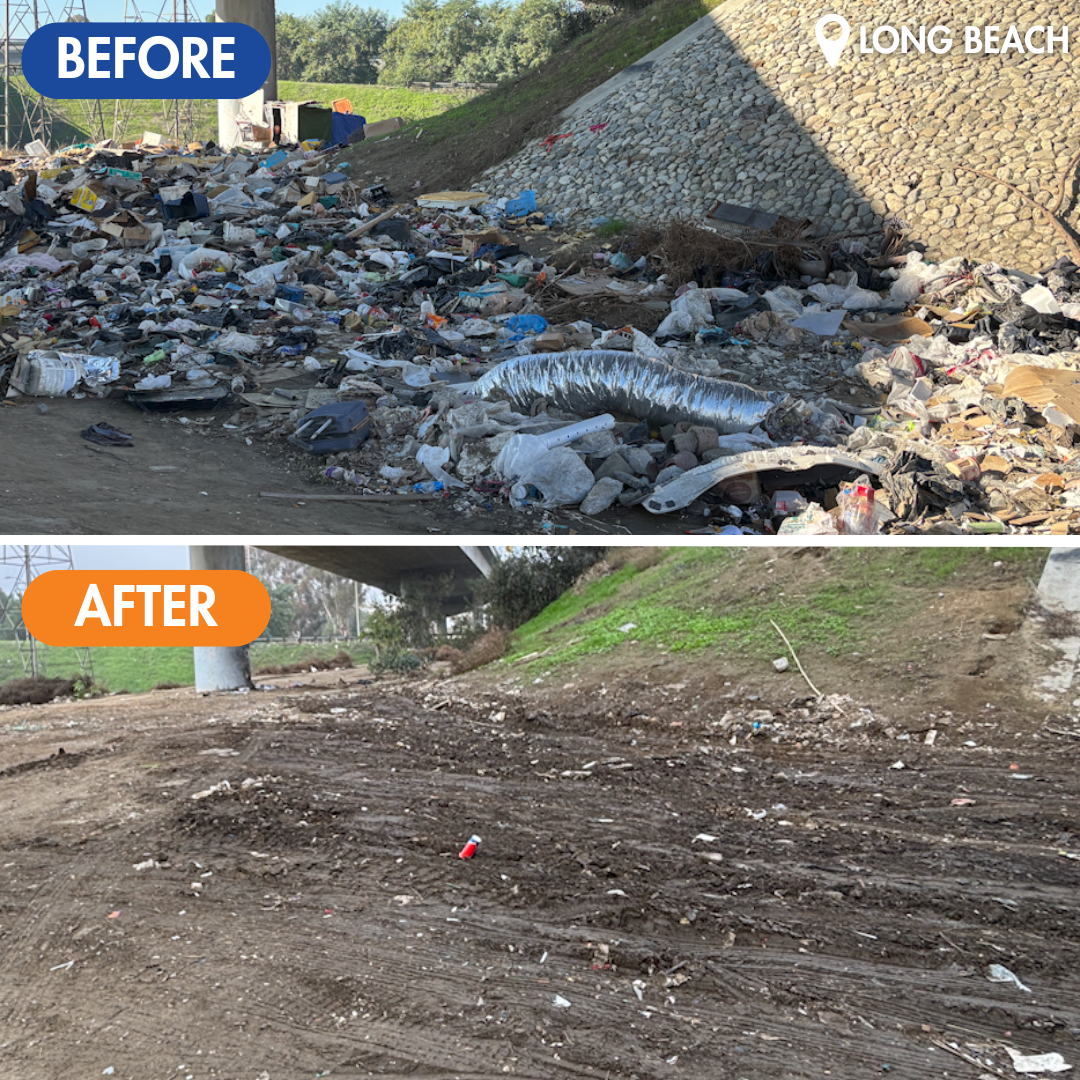
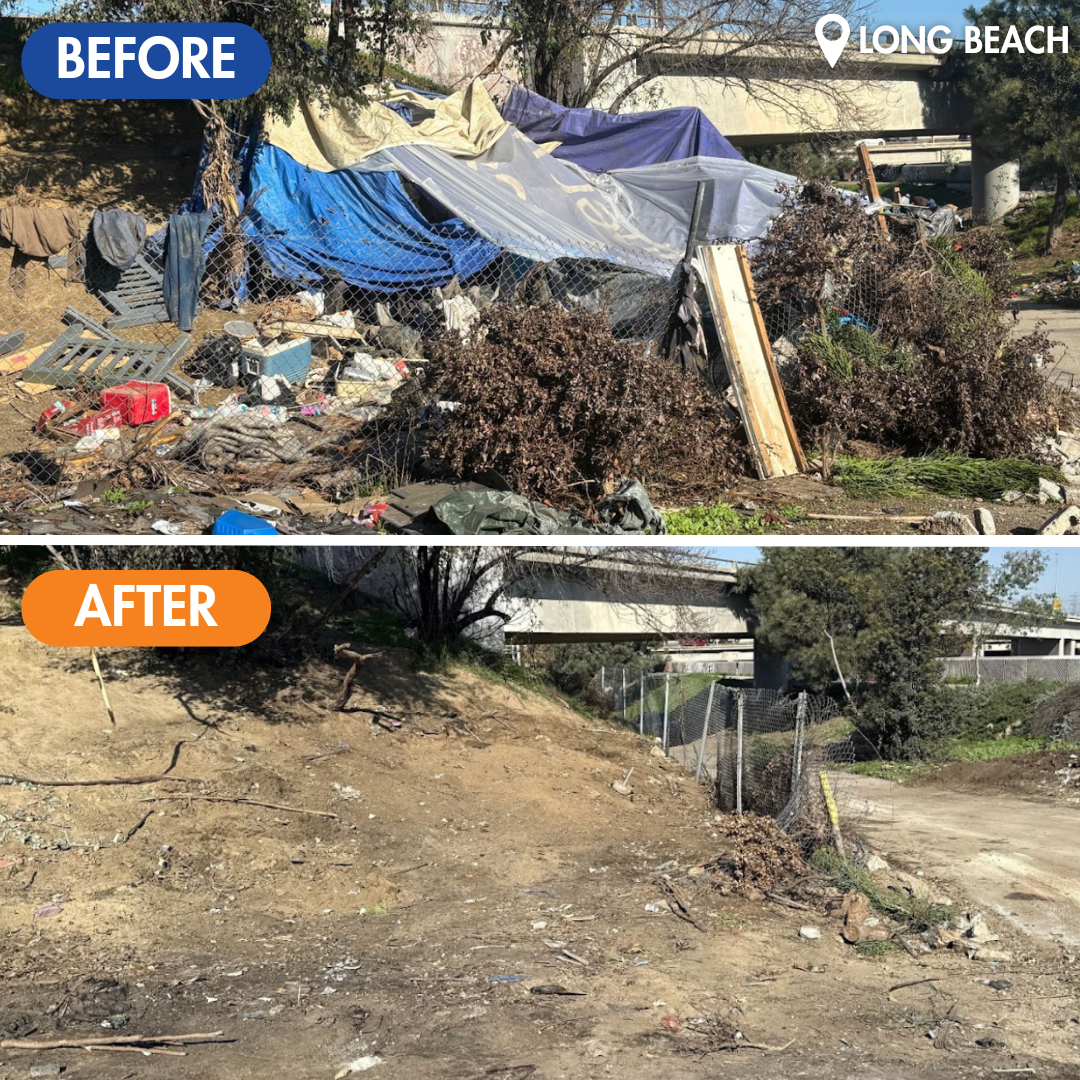
This adds to work that has been underway since 2021, with Caltrans having removed more than 19,000 encampments on state right-of-way and collected approximately 354,000 cubic yards of litter and debris.
Providing shelter in Long Beach
Twenty-five people in the encampment were connected with shelter through the operation, being moved from the hazardous outdoor location to a state-funded Homekey site nearby. The Homekey site, which opened on October 29, is an interim housing location that is already paving the way toward stability and permanent housing. The Homekey program is an effort launched in 2019 to rapidly house individuals experiencing homelessness. Through the program, the state provided local communities with funding to transform existing buildings — such as commercial spaces, hotels, motels, adult residential facilities, and manufactured housing — to permanent or interim housing for the target population. Across three rounds of the original Homekey program, HCD awarded more than $3.6 billion to fund 261 projects with 15,962 homes expected to house more than 175,000 Californians over the projects’ lifetimes.
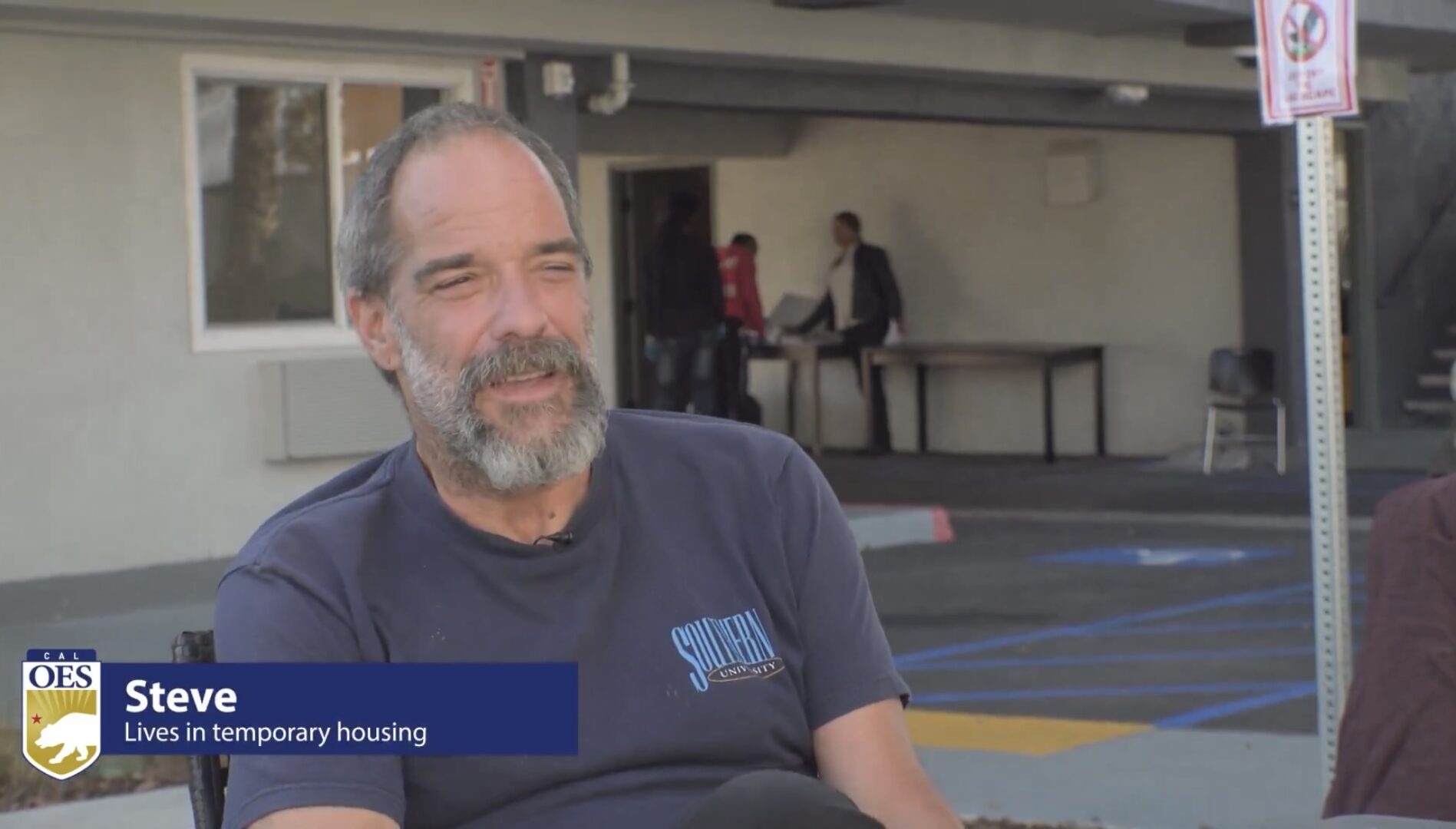
This includes Steve, who was connected with shelter after living in the encampment for a number of years and who expressed that this shelter “saved my life.”
Strategies that work
Governor Newsom is the first Governor to make addressing homelessness – a decades-in-the-making issue – a top priority. Since taking office in 2019, Governor Newsom has created unprecedented policy and structural changes in state government to help California better address its housing and homelessness crises, including additional and unprecedented support for local governments, stronger accountability and enforcement, transformational changes to mental health services and state government, and groundbreaking reforms to create more housing, faster than ever before
Turning around a nationwide crisis
The Newsom administration is making significant progress in reversing decades of inaction on homelessness.
Last year, the state held the growth of unsheltered homelessness to just 0.45%, compared to a national increase of nearly 7%. States like Florida, Texas, New York, and Illinois saw larger increases both in percentage and absolute numbers. In 2024, while homelessness increased nationally by over 18%, California limited its overall increase to just 3% — a lower rate than in 40 other states. California also achieved the nation’s largest reduction in veteran homelessness and made meaningful progress in reducing youth homelessness.
And this year, many of California’s communities are reporting reductions in homelessness – with a particularly notable reduction in unsheltered homelessness.