
California has replaced asphalt with trees, shade, and protection from extreme heat at 215 schools statewide
What you need to know: Since 2022, CAL FIRE’s Green Schoolyards Grant Program has invested more than $156 million to cool down school campuses across California by replacing heat-trapping asphalt with trees, plants, and green space that protect kids from extreme heat and give them better places to learn.
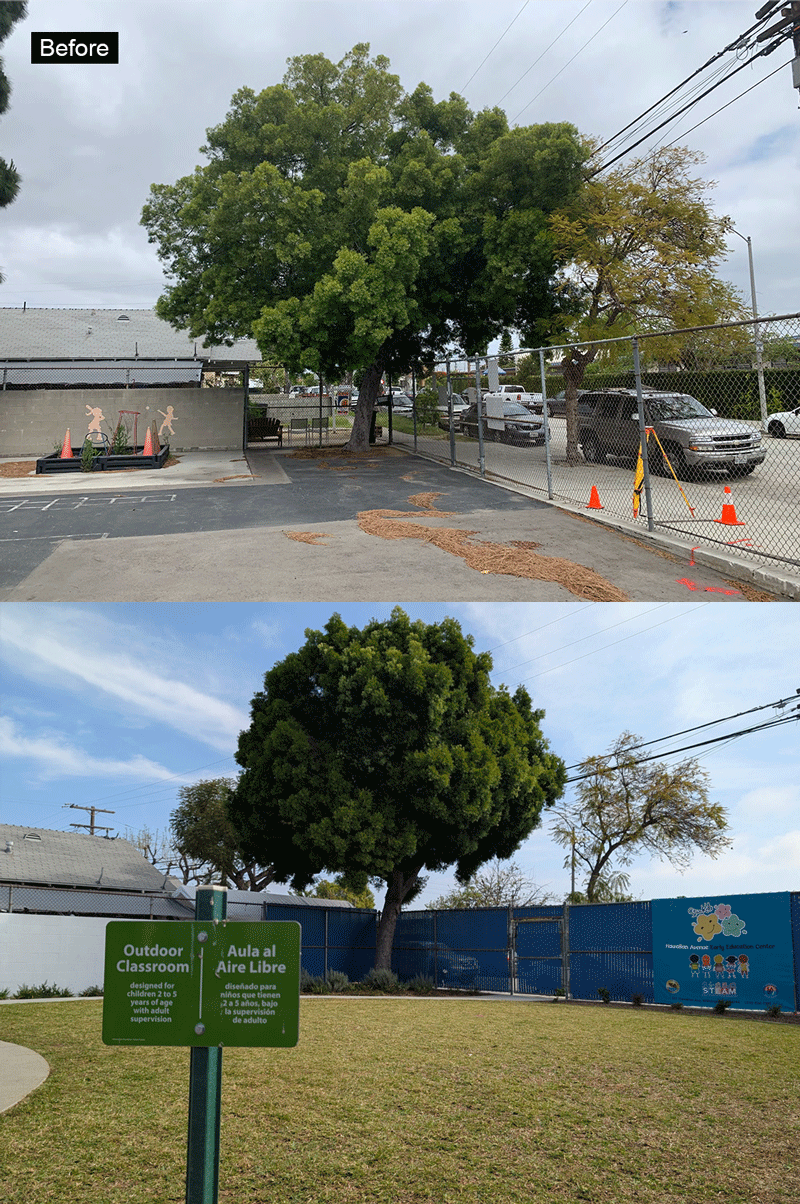
SACRAMENTO – Governor Newsom today highlighted CAL FIRE’s Green Schoolyards program and the progress it’s making across California. For millions of kids — especially in low-income communities — the schoolyard is a barren, heat-trapping asphalt space that can exceed 150 degrees on a hot day. This program is already beginning to change that.
Since 2022, the Newsom administration— in partnership with the Legislature— has invested more than $156 million in Green Schoolyards projects through CAL FIRE — improving conditions at more than 215 school campuses statewide, reaching 94,000 children, and planting more than 6,000 trees to create safer, greener spaces to learn and play.
Kids shouldn’t have to choose between going outside and staying safe from the heat. Every child deserves a healthy, safe place to learn. We’re planting trees, creating shade, and transforming schoolyards that will protect our children for generations to come.
Governor Gavin Newsom
When kids have safe, green spaces at school to play and learn outside, their overall health and wellbeing improve. California recognizes that every child deserves the best start in life – and that means access to green schoolyards that reduce heat, improve air quality, and provide hands-on learning environments that foster a connection to nature.
First Partner Jennifer Siebel Newsom
The impact of swapping asphalt for trees, gardens, and shade will last for generations. These nature-based solutions — native trees and plants that thrive in California’s environment — reduce extreme heat, improve air quality, capture stormwater, and expand urban tree canopy in the communities that need it most.
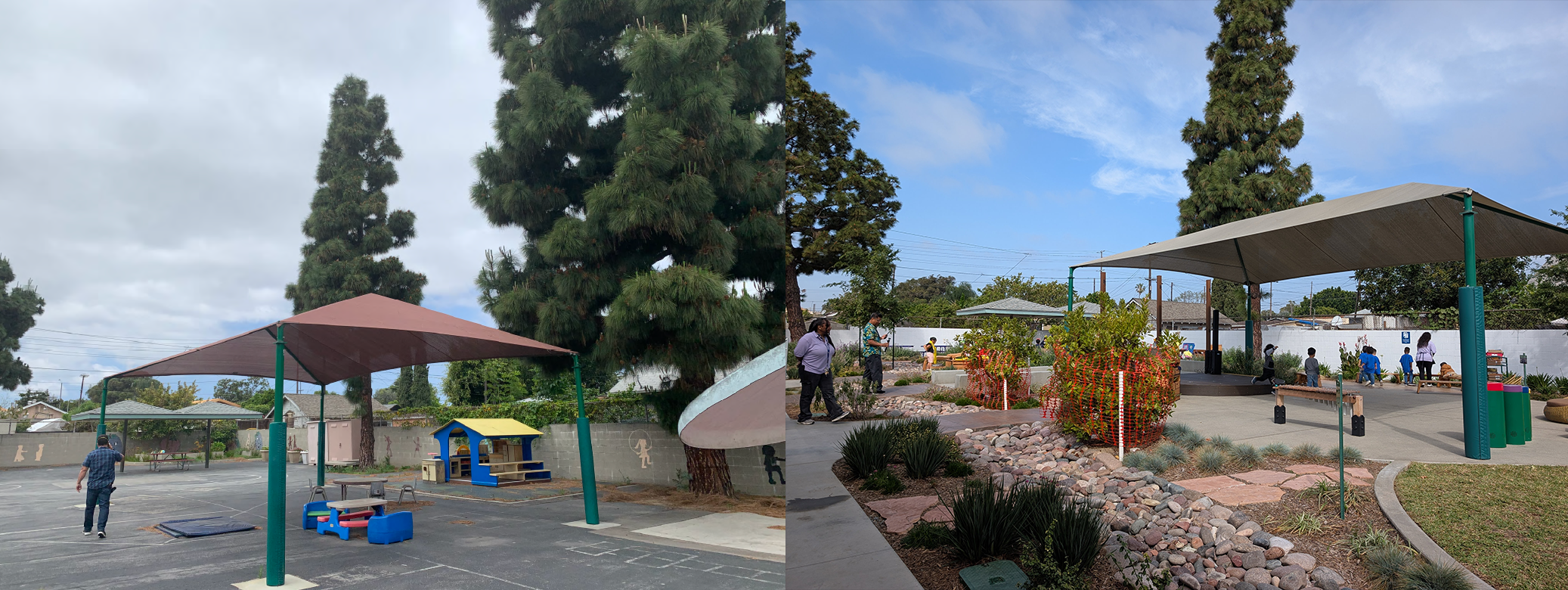
Before and after pictures of transformed school yards
“CAL FIRE’s Green Schoolyards Program is helping create safer, healthier places for students to learn and thrive,” said CAL FIRE Deputy Director of Natural Resource Management Eric Huff. “By increasing shade and green space on school campuses, we are protecting vulnerable communities, supporting student well-being, and advancing California’s climate resilience.”
Statewide, more than 2.59 million students attend schools with less than five percent tree canopy, and the median canopy across campuses is just 6.4 percent. These conditions disproportionately impact low-income communities and underscore the need for greener, safer school environments. That’s why CAL FIRE’s program targets the schools that need it most: campuses in high-heat, underserved neighborhoods where shade is scarce, and asphalt is everywhere.
“With this new environment, our students are opened up to different facets and opportunities of learning,” said Raquel Shepard, Early Education Principal of the Hawaiian Avenue Early Education Center (HEEC), part of the Los Angeles Unified School District (LAUSD). “To see a whole school become vibrant and inviting and a service to the community and children this way tops off my career.”
HEEC is one of 35 LAUSD campuses that serve underprivileged or disadvantaged communities that received Green Schoolyards funding.
Earlier this month CAL FIRE announced the availability of $13.5 million in new Green Schoolyards funding to support educational facilities impacted by the 2015 Aliso Canyon gas leak. Funding is available for campuses in Porter Ranch, Granada Hills, Northridge, Chatsworth, North Hills, Canoga Park, Reseda, Winnetka, West Hills, Van Nuys, and Lake Balboa. These grants will support projects such as planting trees and vegetation, converting pavement into green space, and expanding access to nature-based learning environments to help reduce extreme heat and improve conditions for students.
The science is clear: green schoolyards work
Research consistently shows that access to green space and nature at school has measurable benefits on children’s physical and mental health. Studies have found that kids who spend time in greener school environments show improved concentration, reduced stress, and better overall academic performance. A systematic review published in Springer Nature found that school-led nature interventions improve children’s social relationships, cognitive performance, and emotional well-being. The American Academy of Pediatrics has also documented green schoolyard benefits for heart health and mental health.
Green schoolyards also reduce kids’ exposure to extreme heat while they play outdoors, a growing threat to which children are especially vulnerable.
Beyond the classroom, the benefits extend to the broader community. The benefits of trees and plants are critical: they improve air quality, enhance stormwater management, reduce energy usage, and lower greenhouse gas emissions.
Bottom line: greener schools are better for kids, the community, and the planet.
California’s commitment to generations of kids
The Green Schoolyards program is designed to tackle the stark reality that far too many kids — especially in low-income communities — attend schools with too much heat-trapping asphalt, little shade, and nowhere safe to go outside on a hot day.
In July 2023, Governor Newsom and First Partner Jennifer Siebel Newsom launched the program with an initial investment through CAL FIRE — the first round of what would become an important commitment under his Extreme Heat Action Plan. That first round reached 100 schoolyards statewide, with implementation projects in some of California’s largest districts, including Los Angeles and San Francisco Unified. Just a month later, in August 2023, Governor Newsom announced an additional investment. Since then, the program has continued to grow its impact.
The Green Schoolyards Grant Program is administered by CAL FIRE’s Urban and Community Forestry Program (UCF). The UCF Program expands and manages trees and green spaces in communities statewide through grants, partnerships, and technical assistance. Focused on disadvantaged areas, the program supports tree planting, workforce development, and green infrastructure projects. These efforts help reduce extreme heat, improve air and water quality, lower greenhouse gas emissions, and strengthen community resilience while enhancing the health and quality of life for Californians where they live, work, and learn.