
As Trump undermines America’s alliances and energy security, Governor Newsom builds lasting global partnerships at Climate Week NYC
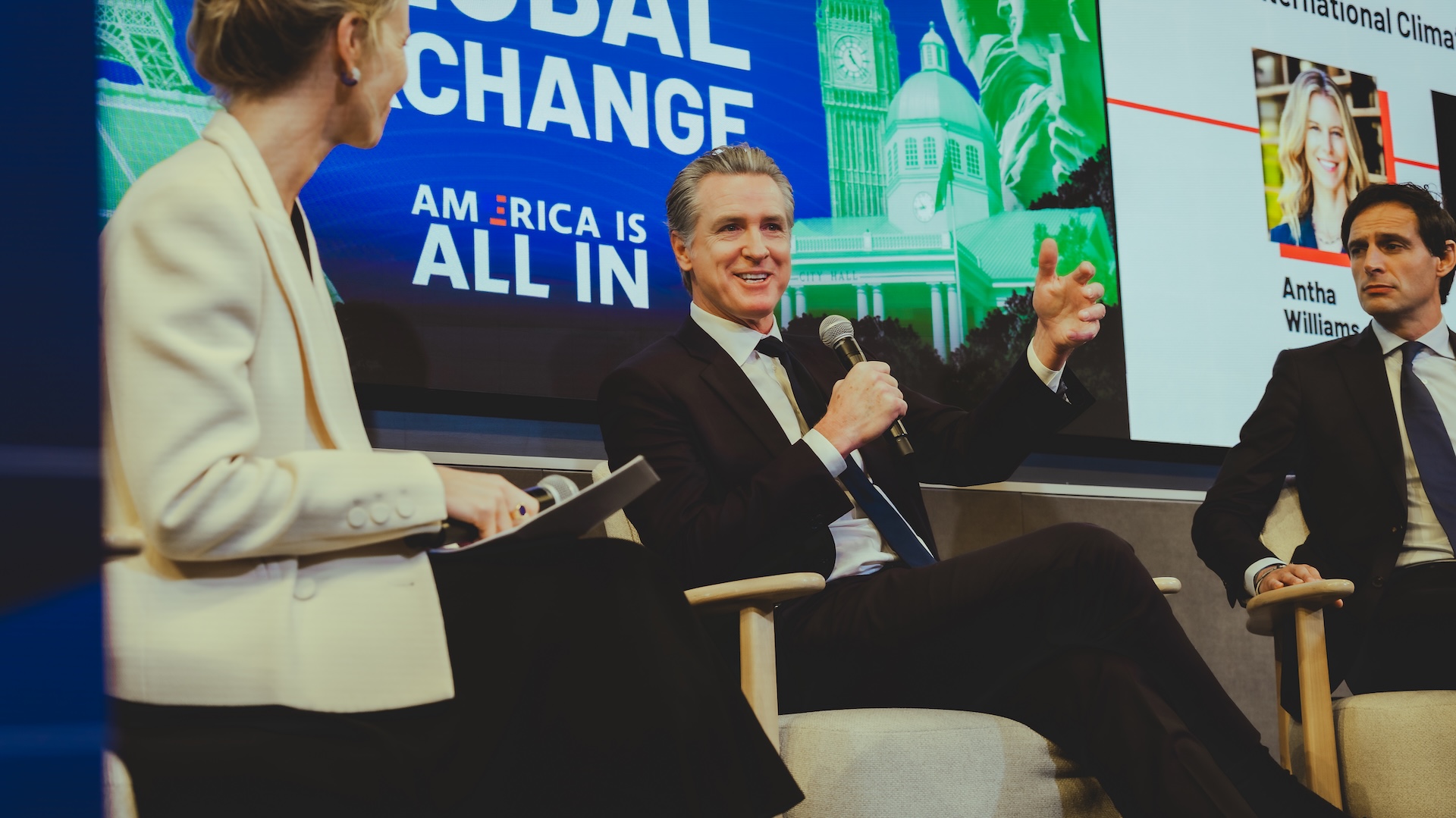
What you need to know: Governor Newsom kicked off California’s participation at Climate Week at the United Nations General Assembly by advancing new international partnerships on clean energy, energy security, and climate resilience — including signing a new Memorandum of Understanding with Spain.
NEW YORK CITY – Governor Gavin Newsom today opened California’s participation at Climate Week NYC by meeting with international leaders and announcing new partnerships to advance clean energy, strengthen energy security, and prepare for the impacts of climate change.
A key announcement from the day was a new Memorandum of Understanding (MOU) with Spain. Governor Newsom joined Spanish Prime Minister Pedro Sánchez and Deputy Prime Minister Sara Aagesen to sign the MOU, which expands cooperation on clean energy, electrification, battery storage, carbon markets, methane reduction, climate resilience, and sustainable development.
California is proving that cutting climate pollution and leading the clean energy transition is an economic growth strategy. Clean energy means more jobs, lower household costs, stronger energy security, and the opportunity to win the clean industries of the future.
At a moment of increasing global instability, California will continue building strong relationships with partners around the globe to build a cleaner, more prosperous, more secure future.
Governor Gavin Newsom
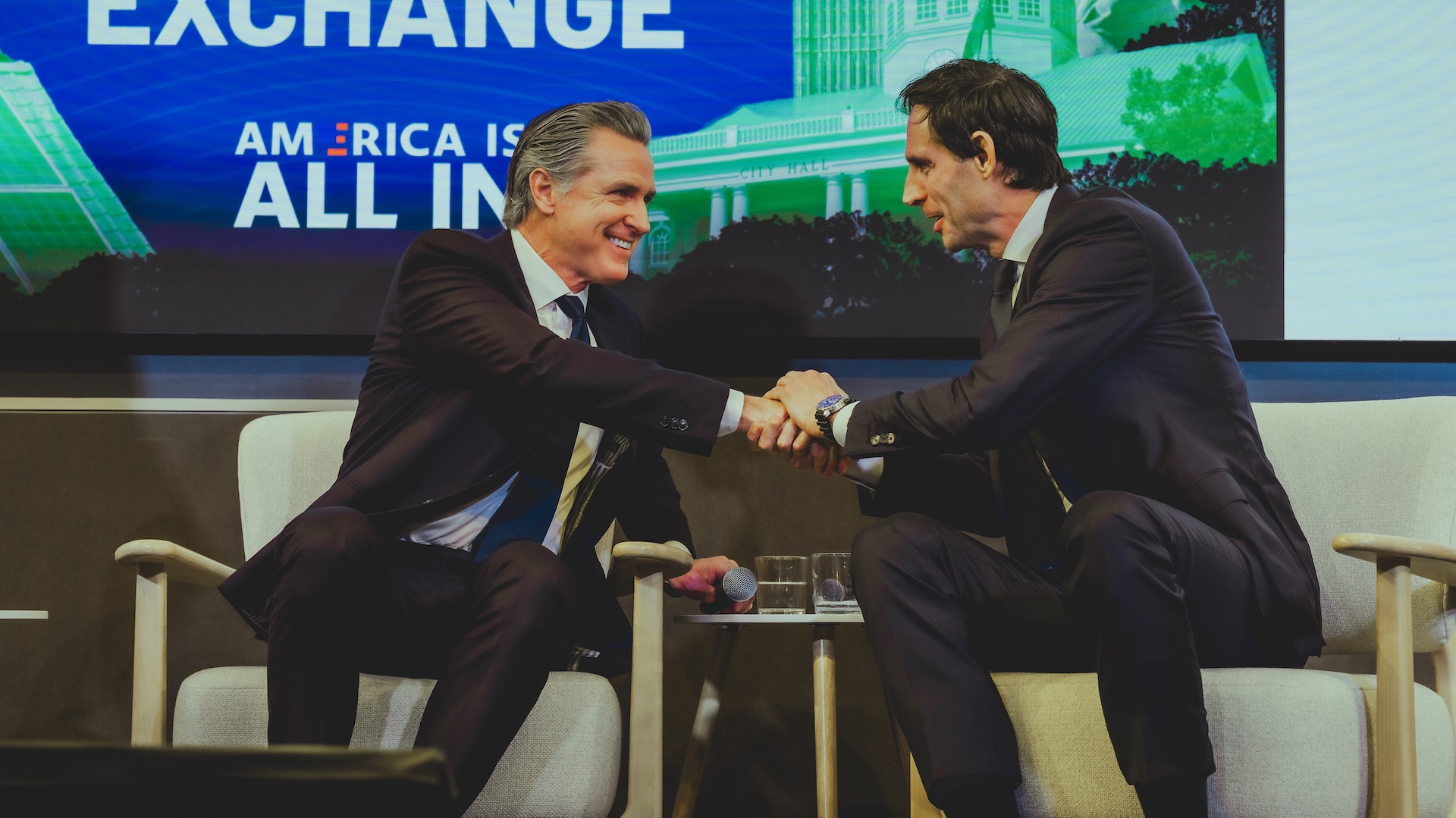
Governor Gavin Newsom joins European Commissioner for Climate, Net Zero and Clean Growth Wopke Hoekstra for a fireside conversation at America Is All In’s Local to Global Exchange during Climate Week NYC 2026.
Strengthening global climate leadership
California is investing in earlier preparation and stronger resilience. This summer, the state released an updated Extreme Heat Action Plan and expanded its heat tool — CalHeatScore — to provide communities with real-time, ZIP-code-level information about heat risk. Yesterday, Governor Newsom also proclaimed a state of emergency to streamline preparations for a historic El Niño and support communities and state agencies responding to heightened risks of flooding, coastal erosion, and severe storms.
The Governor and the Commissioner also discussed the growing convergence of climate, energy security, and economic competitiveness. As Trump’s war with Iran continues rattling volatile global fossil fuel markets, California and Europe are accelerating electrification and clean energy deployment to strengthen energy independence, protect consumers, and build more resilient economies. At the same time, China is moving aggressively to dominate the clean energy economy. The Governor and Commissioner both warned that California and our partners cannot afford to cede the industries, jobs, and supply chains that will define the next generation of the global economy.
The conversation also underscored the urgency of continued climate action as the world approaches a period when, as the UN warned earlier this month, temporarily exceeding 1.5 degrees Celsius (2.7 degrees Fahrenheit) of warming is increasingly difficult to avoid.
Strengthening California subnational climate cooperation
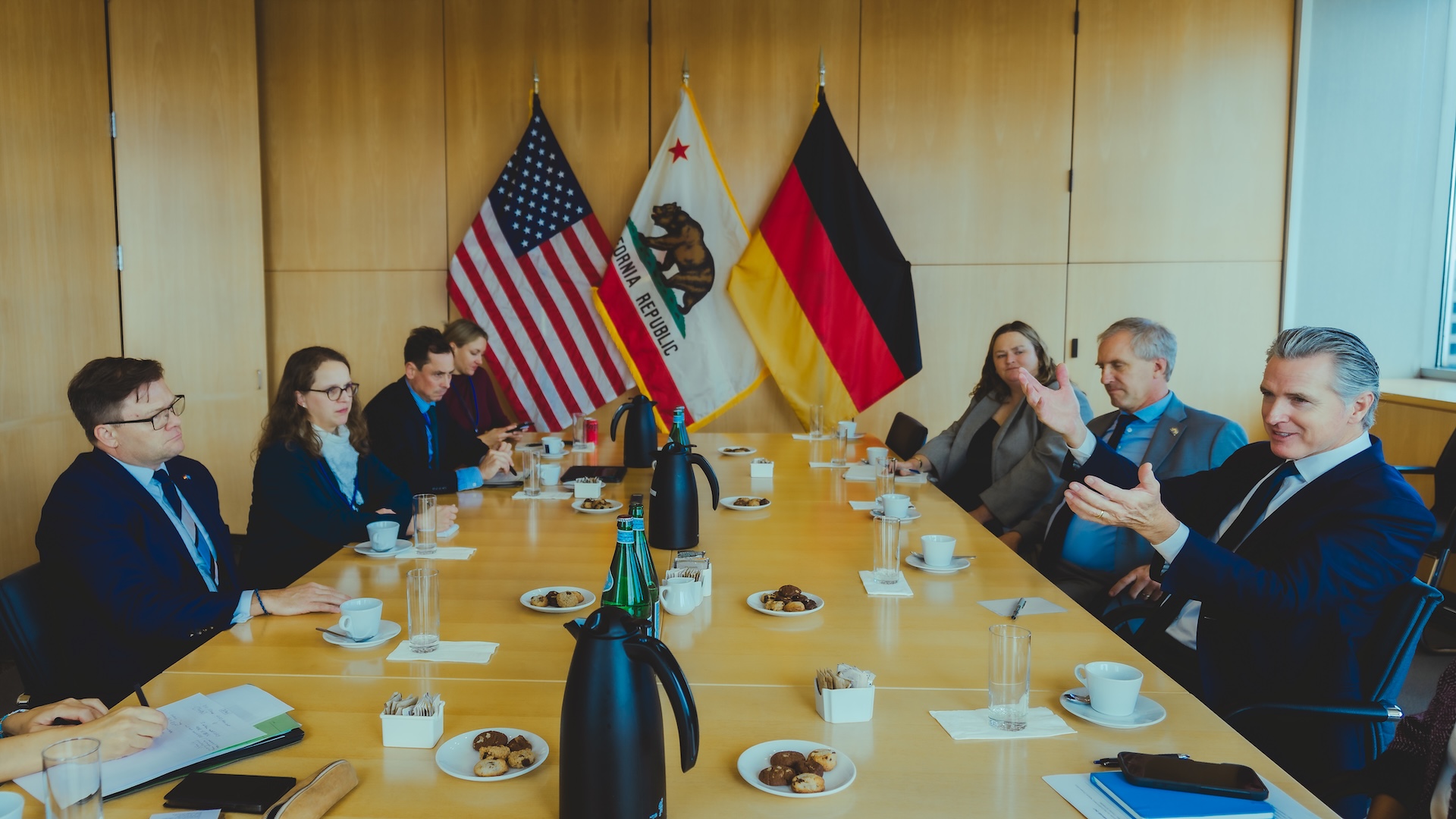
Governor Gavin Newsom and German Federal Environment Minister Carsten Schneider during Climate Week NYC 2026.
Germany
Governor Newsom met with German Federal Environment Minister Carsten Schneider to discuss opportunities to deepen California-Germany cooperation on clean energy, climate action, and shared economic opportunity. The Governor was joined by Yana Garcia, Secretary of the California Environmental Protection Agency, and David Hochschild, Chair of the California Energy Commission.
California and Germany have already collaborated through key international climate and clean-energy initiatives, including the Global Offshore Wind Alliance, the ZEV Transition Council, and the International Carbon Action Partnership. California and the German state of Baden-Württemberg are also co-founders of the Under2 Coalition and members of the Subnational Methane Action Coalition.
The group discussed a wide range of bilateral issues on climate, including implementing electric vehicle incentives, expanding battery storage to strengthen grid reliability, and competing with China in green energy and zero-emission vehicle production.

Governor Newsom met with Spanish President Pedro Sánchez to sign a new Memorandum of Understanding strengthening California-Spain collaboration on climate action and clean energy.
Spain
Governor Newsom also met with Spanish President Pedro Sánchez and Third Deputy Prime Minister and Minister for Ecological Transition and Demographic Challenge Sara Aagesen to sign a new Memorandum of Understanding strengthening California-Spain collaboration on climate action and clean energy.
The MOU advances cooperation on clean energy and electrification, climate resilience and adaptation, carbon markets, methane reductions, the circular economy, and resilient buildings and urban design.
California and Spain share a commitment to scaling renewable energy and battery storage, strengthening grid reliability, preparing for extreme heat and wildfire, and ensuring the clean-energy transition delivers benefits for communities, workers, and businesses.
Supporting healthy communities
Nearly 3 million California students are benefiting from California’s Farm to School programs. Championed by the First Partner and in partnership with the Legislature, Governor Newsom signed legislation to permanently fund California’s program, ensuring schools can continue serving students healthy meals made with California-grown ingredients.
Farm to School investments support communities beyond the cafeteria. Every $1 invested through California Department of Food and Agriculture Farm to School farmer grants generates an estimated $2.01 in economic activity, helping strengthen local food systems and support California growers and producers.
California at Climate Week NYC
Governor Newsom is participating to highlight California’s record of cutting pollution while growing the economy, strengthen partnerships with international and subnational leaders, and accelerate progress on clean energy, zero-emission transportation, climate resilience, and economic opportunity.
California’s global climate network
Golden State and global partnerships
-
United Kingdom (2026): California and the United Kingdom signed a memorandum of understanding to tackle climate change and promote sustainable development together. The memorandum of understanding builds on an already strong history of cooperation, and focuses on areas for collaboration including clean energy technologies, climate resilience, decarbonizing transportation, and protecting the natural environment.
-
Chile (2025): California and Chile signed a memorandum of understanding regarding exchanging information, developing best practices, and cooperating on methane emissions reduction. Methane is a highly potent greenhouse gas, and the partnership between California and Chile opens up new opportunities for both partners to cooperate on methane reduction in waste, agriculture, and energy sectors.
-
Colombia (2025): California and Colombia signed a partnership to advance joint efforts on forest conservation, methane reduction, climate resilience, and clean energy development. The memorandum of understanding deepens coordination on protecting the Amazon, strengthening biodiversity, and expanding nature-based climate solutions that support sustainable and equitable economic growth.
-
Nigeria (2025): California signed a memorandum of understanding with Nigeria on sustainable urban transportation, green ports, low-carbon transportation fuels, climate adaptation, methane detection and abatement policies, greenhouse gas emissions and air quality, and academic exchange and university partnerships. The partnership will build upon our shared commitment to sustainable growth, accelerate the transition to zero-emission transportation, and expand opportunities for the next generation.
-
Brazil (2025): California signed a memorandum of understanding with the Brazilian federal government to scale up cooperation on climate, clean energy, cutting pollution, and job-creating climate opportunities. This new partnership, announced in September 2025, will advance market-based carbon pricing programs, expand clean transportation, including zero-emission vehicles and low-carbon fuels, and strengthen air quality management through enhanced monitoring and regulatory controls. The partnership also focuses on conserving 30% of lands and coastal waters by 2030, including nature-based solutions and biodiversity protection. In 2025, California also advanced a partnership with the State of Pará to strengthen cooperation on wildfire prevention and response — enhancing forest monitoring, identifying areas most at risk, and sharing research and expertise to improve firefighting and emergency management.
-
Kenya (2025): California signed a partnership focused on cutting pollution and supporting trade. The partnership advances medium- and long-term low-carbon development, policy research, development, and innovation in sustainable land use and urban planning that reduces long commutes and urban sprawl, while promoting integrated land use and transport systems.
-
Noord-Holland (2024): California and Noord-Holland signed a Letter of Intent advancing next-generation air mobility — from drones to zero-emission aircraft. Joint innovation missions are producing pilot projects that inform California’s Advanced Air Mobility Implementation Plan and readiness for major global events.
-
Australia (2023): California signed a memorandum of understanding (MOU) with Australia that helped inform the country’s first-ever vehicle emissions standards through input from the California Air Resources Board. The California Public Utilities Commission and California ISO have also advised Australia on electricity market reform to better align incentives for renewable energy.
-
British Columbia (2023): California and British Columbia signed a memorandum of understanding on mutual wildfire assistance that is delivering results. British Columbia sent incident management experts to support California’s Palisades Fire in 2025, while CAL FIRE deployed personnel during British Columbia’s 2025 fire season. These exchanges established a lasting framework for cross-border wildfire support.
-
China (2023): California signed five Memoranda of Understanding (MOUs) with China’s National Development and Reform Commission, the provinces of Guangdong and Jiangsu, and the municipalities of Beijing and Shanghai to advance cooperation in cutting greenhouse gas emissions, transitioning away from fossil fuels, and developing clean energy.
-
Denmark (2021): California and Denmark signed a memorandum of understanding to collaborate on groundwater mapping, leak detection, and water efficiency, which has modernized California’s data systems and informed key state programs, like the Airborne Electromagnetic Survey. Danish technologies and expertise have helped strengthen drought and water-supply resilience statewide.
-
Mexico (Baja California & Sonora): California signed Memoranda of Understanding (MOUs) with the Mexican states of Baja California and Sonora to advance zero-emission freight corridors, clean ports, and battery manufacturing — strengthening North American supply chains and workforce readiness. Joint forums have already produced new research collaborations and training programs advancing clean-tech.
California’s clean energy leadership
Batteries play a key role in California’s goal of getting all of its electricity from clean sources by 2045. The most recent numbers, from the end of 2024, show real progress: 67% of retail electricity sales in the state already come from clean energy. Last year, clean energy met 100% of the state’s electricity needs for at least part of the day on 279 separate days. So far in 2026, that’s happened on more than nine out of 10 days during the first half of the year.
Clean energy is also good for the economy. California leads the nation in total clean energy jobs, with 552,300 workers employed across clean energy technologies, nearly twice as many as the second-ranked state, Texas, according to a 2025 report from E2. California’s clean energy workforce grew by nearly 7,300 workers in 2024, outpacing job growth in the rest of the state’s economy by more than three times.