
Governor Newsom signs housing legislation, cementing California’s record progress to reduce unsheltered homelessness and build more homes
What you need to know: Governor Newsom today announced the signing of a housing bill package that will build more homes and create more affordable housing.
SACRAMENTO – California continues to build more homes and make progress in reducing unsheltered homelessness as Governor Gavin Newsom today signed a new package of housing and homelessness legislation to accelerate construction, cut unnecessary red tape, expand housing options, and connect homeless individuals with recovery-oriented housing.
This announcement builds on years of work to address housing and homelessness, including annual residential construction increasing 59% since 2018 and experiencing the largest numerical reduction in unsheltered homelessness of any state – a 6.8% decline.
Every Californian deserves a fair shot at a stable home – families shouldn’t have to wait years for housing to be approved and built in their communities. That means continuing to push forward with smart, practical solutions that open more doors for families and strengthen communities across our state.
Governor Gavin Newsom
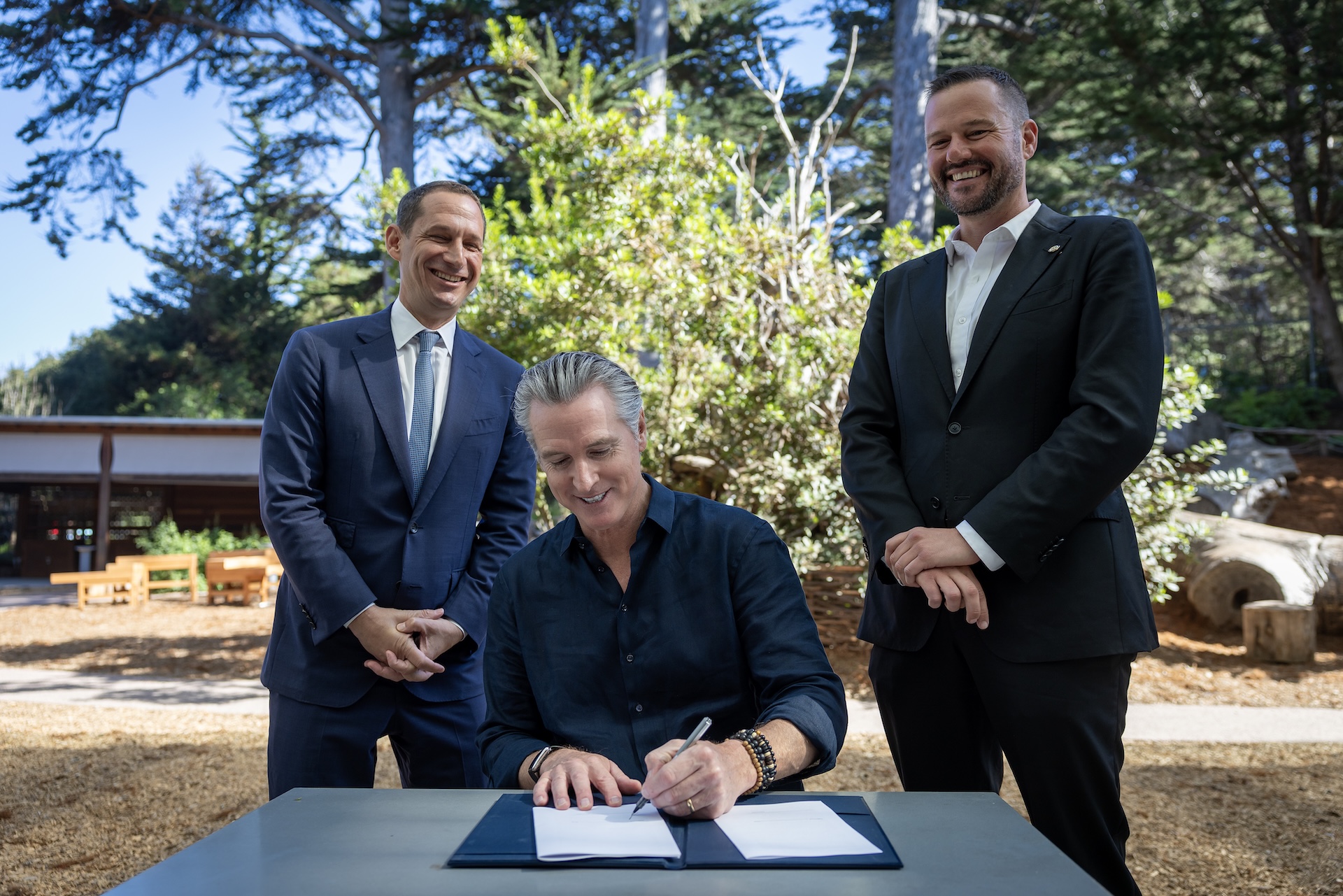
Governor Newsom signing AB 1294 and AB 1556. Behind him are San Francisco Mayor Daniel Lurie and Assemblymember Matt Haney (D-San Francisco).
Since taking office, Governor Newsom has paired historic housing investments with strong accountability and sustained reforms to planning, permitting, zoning, CEQA, and streamlining rules to make it easier and faster for more Californians to access a safe, stable, and affordable place to call home.
This year’s package builds on that work by helping Californians build more homes in existing communities, expanding attainable homeownership options, and reducing unnecessary barriers to construction.
Cut red tape
✅Strengthening deadlines and enforcement for housing permits by limiting repeated plan-check reviews and tightening appeal timelines so local jurisdictions approve permits for new housing in a timely manner.
Expanding housing options and paths to homeownership
✅ Supporting more affordable rental housing for moderate-income renters by establishing a limited pilot program providing a targeted property-tax incentive for qualifying new rental housing serving moderate-income households in the Counties of Alameda and Sacramento, and the City and County of San Francisco.
✅ Creating more opportunities for townhome ownership by establishing a streamlined approval pathway for qualifying townhome developments, expanding more paths to homeownership.
Modernize how California builds housing
✅Creating more consistent factory-built housing standards by providing more consistent statewide building-code treatment for qualifying factory-built housing structures.
✅Streamlining factory-built housing inspections and fees by expanding inspection options, reducing duplicative inspections, and limiting excessive local permitting and inspection fees.
✅Removing financing barriers for factory-built housing by requiring state affordable-housing programs to better account for the unique financing needs of factory-built housing, including upfront factory-production costs.
Make it easier for Californians to improve, maintain, and lower the cost of their homes
✅Cutting red tape for window replacements by streamlining local approval and removing unnecessary HOA restrictions on energy-code-compliant windows.
Unlocking major mixed-use redevelopment projects
✅ Unlocking housing on former military land by facilitating the redevelopment of the former Concord Naval Weapons Station, which is planned to deliver at least 10,000 homes, including at least 25% of them affordable to lower-income households.
✅Advancing housing and redevelopment in San Diego by streamlining environmental review for the redevelopment of the former Sports Arena site, supporting a project with at least 4,250 homes, including 2,000 affordable homes, along with a new entertainment venue, public open space, and commercial uses.
Connecting housing with addressing homelessness and recovery
✅Providing housing and recovery options for homeless by making Housing First-compliant recovery housing clearly eligible for state funding, while preserving tenant protections and access to other housing options.
Here is the full list of bills highlighted above:
-
AB 1294 by Assemblymember Matt Haney (D-San Francisco) — Real property tax: welfare exemption: moderate-income housing. View signing message here.
-
AB 1556 by Assemblymember Matt Haney (D-San Francisco) — Recovery housing: funding.
-
AB 1621 by Assemblymember Lori Wilson (D-Suisun City) — Planning and Zoning Law: postentitlement phase permits: Housing Accountability Act.
-
AB 1751 by Assemblymember Sharon Quirk-Silva (D-Fullerton) — Missing Middle Townhome Ownership Act.
-
AB 1815 by Assemblymember Buffy Wicks (D-Oakland) — Factory-built housing: building standards and local requirements.
-
AB 2058 by Assemblymember John Harabedian (D-Pasadena) — California Factory-Built Housing Law.
-
AB 2185 by Assemblymember Sharon Quirk-Silva (D-Fullerton) — Housing: multifamily affordable housing programs.
-
SB 328 by Senator Tim Grayson (D-Concord) — California Environmental Quality Act: exempt surplus land.
-
SB 344 by Senator Akilah Weber Pierson (D-San Diego) — California Environmental Quality Act: City of San Diego: mixed-use development project.
-
SB 908 by Senator Scott Wiener (D-San Francisco) — Residential windows: retrofitting: residential window replacement projects: California Building Code compliance.
-
SB 958 by Senator Akilah Weber Pierson (D-San Diego) — California Environmental Quality Act: environmental impacts: building height.
“The Concord Community Reuse Project represents a once-in-a-generation opportunity to transform our city and usher in a bright future for our community and the greater Bay Area,” said Senator Grayson. “SB 328 will leverage already completed environmental reviews to help get shovels in the ground sooner. After decades of public engagement, planning, and discussion, Concord is ready for the thousands of good-paying jobs this project will create, and ready to see this land transformed into homes, schools, businesses, parks, and community centers for all to enjoy.”
“California’s housing shortage demands that we continue finding responsible ways to build more homes and create communities where people can live, work and thrive,” said Senator Weber Pierson, M.D. “SB 344 moves us closer to transforming San Diego’s Midway District into a vibrant community with new housing, businesses, public spaces and economic opportunities, while SB 958 helps address unnecessary barriers that can stand in the way of housing. I thank Governor Newsom for signing these important bills and helping us move forward with solutions that will expand housing opportunities and deliver meaningful progress for San Diego and communities across California.”
“Homeownership is part of the California dream, but for too many working families, that dream feels further out of reach,” said Assemblymember Quirk-Silva. “AB 1751 makes it easier and faster to build townhomes and create new opportunities for families to own a home. We cannot build a stronger future for California if families cannot afford to put down roots. I thank Governor Newsom for signing AB 1751 and for working with us to make homeownership more attainable for Californians across our state.”
“California’s housing crisis demands that we rethink not just what we build, but how we build it,” said Assemblymember Wicks. “That was the driving force behind our Select Committee on Housing Construction Innovation: finding ways to make it easier, faster, and more affordable to build the homes Californians desperately need. AB 1815 is another important step toward turning that work into action, cutting through unnecessary barriers and making room for innovation that can help us build more housing at a lower cost. I’m grateful to Governor Newsom for recognizing that solving our housing crisis means embracing new ways to build, and for helping turn that vision into reality.”
In addition to the measures highlighted above, the Governor also signed the following housing and homelessness bills, including:
-
AB 750 by Assemblymember Sharon Quirk-Silva (D-Fullerton) — Department of Housing and Community Development.
-
AB 939 by Assemblymember Nick Schultz (D-Burbank) — Housing development: density bonuses: affordability of for-sale units.
-
AB 956 by Assemblymember Sharon Quirk-Silva (D-Fullerton) — Accessory dwelling units and junior accessory dwelling units.
-
AB 1732 by Assemblymember David Alvarez (D-San Diego) — California Environmental Quality Act: exemption: affordable housing projects: public university or public college housing projects.
-
AB 1817 by Assemblymember Dawn Addis (D-Morro Bay) — Mobilehome parks: termination of tenancy: failure to comply with a rule or regulation.
-
AB 1924 by Assemblymember Jesse Gabriel (D-Encino) — Statewide homelessness prevention strategy.
-
AB 2020 by Assemblymember Jesse Gabriel (D-Encino) — Housing programs: financing.
-
AB 2050 by Assemblymember Jessica Caloza (D-Los Angeles) — Common interest developments: reserve accounts. View signing message here.
-
AB 2074 by Assemblymember Matt Haney (D-San Francisco) — Regional transit hub districts: downtown housing developments.
-
AB 2296 by Assemblymember Diane Papan (D-San Mateo) — Planning and zoning: housing element: regional housing needs allocation.
-
AB 2390 by Assemblymember Pilar Schiavo (D-Santa Clarita) — Streamlined housing approvals: objective standards: review and modifications.
-
AB 2433 by Assemblymember David Alvarez (D-San Diego) — Housing development: density bonus.
-
AB 2480 by Assemblymember Anamarie Ávila Farías (D-Martinez) — Housing development: density bonus: student housing developments.
-
SB 457 by Senator Josh Becker (D‑Menlo Park) — Housing element compliance: committed assistance: in-kind services: realistic capacity formula.
-
SB 750 by Senator Dave Cortese (D-Silicon Valley) — California Housing Finance Agency: credit enhancement mechanisms study.
-
SB 772 by Senator Christopher Cabaldon (D-Yolo) — Infill Infrastructure Grant Program of 2019: applications: eligibility.
-
SB 916 by Senator Angelique Ashby (D-Sacramento) — Civil actions: housing development projects.
-
SB 1014 by Senator Tim Grayson (D-Concord) — Development projects: preliminary estimate of required improvements: onsite and offsite improvements.
-
SB 1091 by Senator Anna Caballero (D-Merced) — Community Anti-Displacement and Preservation Program.
-
SB 1116 by Senator Anna Caballero (D-Merced)— Planning and zoning: housing development projects: subdivisions.
-
SB 1117 by Senator Sabrina Cervantes (D-Riverside) — Accessory dwelling units and junior accessory dwelling units.
-
SB 1170 by Senator María Elena Durazo (D-Los Angeles) — Joint powers agreements: nonprofit housing developers.
-
SB 1344 by Senator Christopher Cabaldon (D-Yolo) — Civil actions: housing development projects.
An approach that works and delivers results
In addition to today’s bill package, Governor Newsom is creating a structural and foundational model across the state that will have positive impacts for generations to come.
The Governor is streamlining and prioritizing building new housing, funding new shelters, housing, and supports, addressing mental health and its impact on homelessness through voter-approved Proposition 1, and creating new pathways for those who need it most through updated conservatorship laws and to the CARE court system. California is also addressing encampments statewide to help get people off the streets and into care.
In addition to celebrating good work by communities with prohousing designations, Governor Newsom and the legislature have created strong accountability measures to ensure that communities who fail to plan and create housing for their residents can face the consequences. Governor Newsom established HCD’s Housing Accountability Unit in 2021 to ensure that every community is meeting its obligations to plan for housing and follow state housing laws. In 2024, Governor Newsom expanded the unit’s oversight to also include monitoring cities’ and counties’ efforts to address homelessness. The Accountability Unit has “unlocked” 14,059 housing units, including over 4,004 affordable units, that may otherwise have been stuck in the local planning process.
All this work is creating positive results.
California’s investments have created immediate, measurable results and the critical foundation necessary to finally solve California’s housing and homelessness crisis. Governor Newsom’s policies have had a significant impact:
Historic drops in homelessness — California achieved the largest statewide reduction in unsheltered homelessness in 16 years. New federal data also shows California last year saw:
-
Largest reduction in unsheltered homelessness in the nation. From 2024 to 2025, California reduced unsheltered homelessness by 8,391 people, or 6.8% — the largest numerical reduction of any state. That percentage decline is more than twice the national reduction of 2.9% and significantly exceeds that of the next-largest state by population, Texas, which saw a 1.4% decrease.
-
Total homelessness declined. California’s overall homeless population dropped by 5,150 people, or 2.8% — the state’s largest numerical decline since 2009.
-
Leading the nation in reducing homelessness in key populations. From 2023 to 2025, California ranked first among all states and the District of Columbia in reducing the numbers of veteran homelessness, chronic homelessness, homelessness among young adults ages 18-24, and homelessness among parents under 25.
-
Helping people reach permanent housing — From January 2023 through March 2026, more than 110,000 people exited programs funded by California’s Homeless Housing, Assistance and Prevention (HHAP) grants to permanent housing.
In addition, Governor Newsom is addressing a housing shortage that has been decades in the making. Since 2019:
-
Building is happening faster — Annual residential construction has increased by 59%, from 70,000 homes built in 2018 to about 111,000 in 2024.
-
Multifamily construction has reached its highest level in decades — Over the last five years, more multifamily housing units have been built than in any five-year period in over 30 years, and more than 682,000 homes overall have been built statewide since 2019.
-
Approval times have been slashed — Streamlining laws enacted since 2019 have cut average time from development application to entitlement by 57%, from 160 days to 68 days in 2024. The time from entitlement to permit also dropped by 9%.
-
Communities are ready to build more — Through Governor Newsom’s work to ensure all jurisdictions do their part, communities throughout the state have laid the groundwork and have planned to accommodate at least 3.6 million new homes, including 1.4 million affordable units, moving California closer to meeting its long-term housing needs.