
AFTER RECORD REDUCTIONS IN HOMELESSNESS: Governor Newsom announces opening of first Prop 1-funded behavioral health facility
Prop 1 delivering more beds and more treatment slots, ahead of schedule
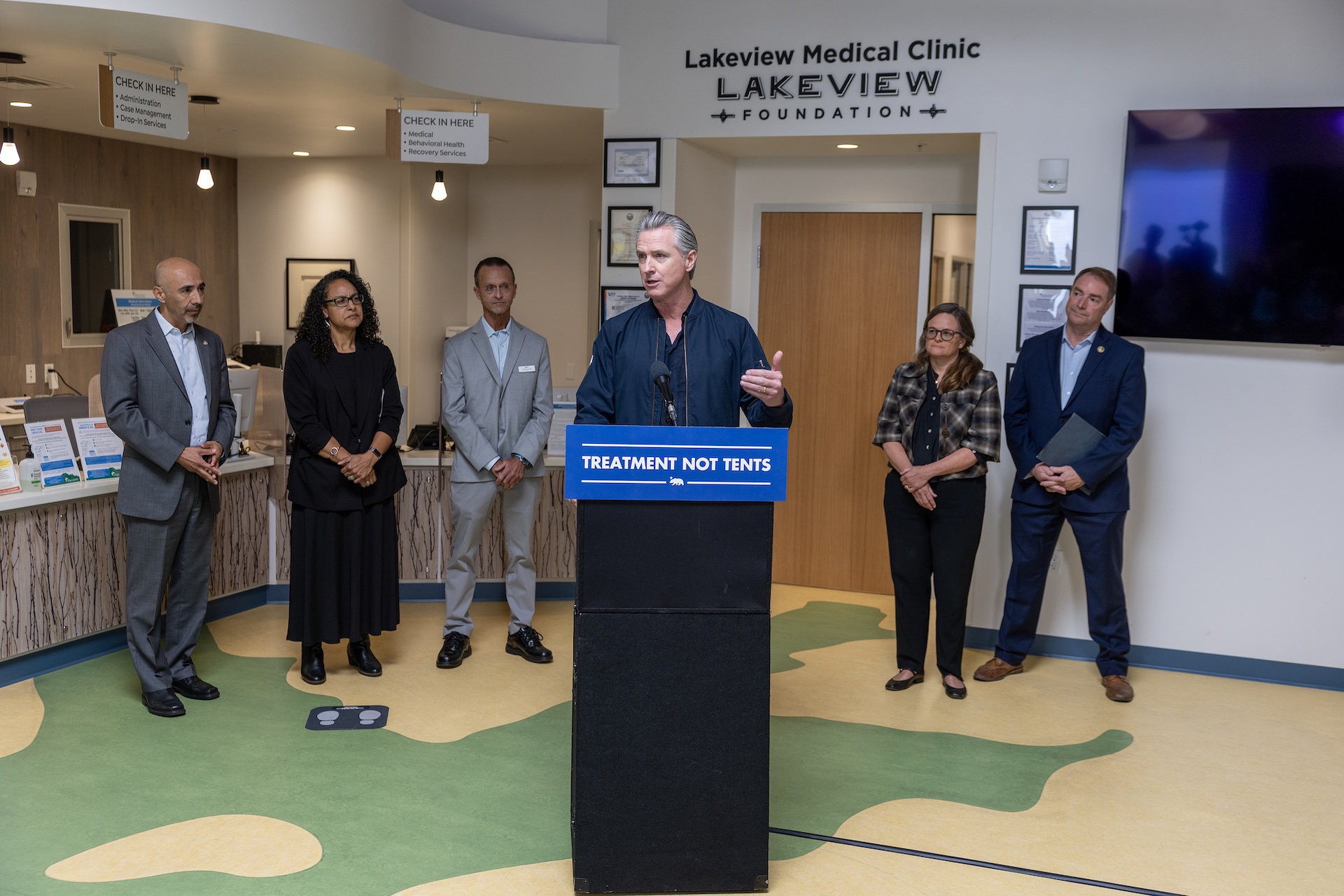
What you need to know: After historic drops in homelessness, Governor Newsom’s landmark reform of California’s behavioral health system has reached an important milestone: the opening of the first behavioral health facility built with voter-approved Proposition 1 funding — ahead of schedule. In the two years since voters approved the measure, the state has already delivered 102% of the beds and 104% of the treatment slots promised.
SAN RAFAEL – As California’s homelessness drops for a second year, Governor Newsom’s transformation of the mental healthcare system continues delivering by connecting people with behavioral health care, addiction services, and keeping people off the streets. Through Proposition 1, which the Governor championed and voters approved in 2024, California is expanding treatment capacity faster than promised — delivering 6,948 residential treatment beds and 27,868 outpatient slots.
Today, the Governor announced that the first behavioral health facility funded by Proposition 1, the Ritter Center in San Rafael, is now open, with 1,412 outpatient treatment slots projected to serve more than 7,000 individuals annually. The facility is funded through Prop 1’s Behavioral Health Continuum Infrastructure Program (BHCIP) Bond, which has already funded 176 projects across 334 facilities for local communities.
When I took office, I committed to creating a statewide strategy to help move people off our streets and into housing and treatment. Over the course of this administration, we’ve built that framework — and we’re delivering results, including the largest two-year drop in homelessness in over a decade.
“In 2024, voters demanded action, results, and accountability with the passage of Prop 1. Today’s announcement is another major step in reversing a crisis decades in the making, and we’re just getting started. We now have more than 100% of the beds and treatment slots we promised to voters, ahead of schedule.
Governor Gavin Newsom
A b-roll package can be downloaded here.
This announcement is the next step in strengthening the continuum of care and reducing homelessness, but it is only the beginning. The state expects to open 13 more Behavioral Health Continuum Infrastructure Program (BHCIP)-funded facilities by the end of 2026, with all construction complete by 2028 — and hundreds more are on the way.

Treatment, not tents
The Ritter Center is the first Bond BHCIP Round 1 project to begin serving Californians; with a community mental health clinic, office-based opioid treatment, and outpatient substance use disorder services. The Ritter Center is the first of hundreds of new facilities expected to open in the coming years.
“This s what meaningful progress looks like: new facilities opening their doors, more treatment options becoming available, and more Californians getting connected to the care they need,” said California Health and Human Services Agency Secretary Kim Johnson. “We are making significant strides toward building a stronger, more accessible behavioral health system that better serves individuals and families across California.”
Promises made, Promises kept. Ahead of schedule.
Bond BHCIP continues to exceed statewide capacity targets:
-
Residential treatment: 6,948 beds — 102% of the goal.
-
Outpatient treatment: 27,868 slots — 104% of the goal.
Bond BHCIP builds upon the foundation of the earlier BHCIP initiative, with projects funded through the state budget prior to Prop 1. Since 2021, BHCIP has awarded a total of $6.1 billion to expand behavioral health infrastructure. This has resulted in 436 projects across 543 behavioral health facilities, which will create 9,570 new beds and 44,863 new outpatient slots projected to serve more than 5.4 million individuals annually. Together, these efforts strengthen the state’s long‑term community‑based behavioral health infrastructure.
Recent efforts span prevention, youth services, housing, reentry supports, and investments in the behavioral health workforce. These investments aim to reverse decades-old gaps in care, reduce homelessness, and keep Californians with serious behavioral health needs out of the criminal justice system through a stronger, more coordinated statewide treatment system.
Accountability and effectiveness
Bond BHCIP projects undergo extensive review before receiving a conditional award and must continue to meet program and funding requirements before the Department of Health Care Services (DHCS), which administers the program, finalizes funding. The state maintains rigorous standards to ensure projects are sustainable and positioned for long-term success.
The Governor is also today announcing new accountability actions, reinvesting more than $146 million in Bond BHCIP funding for three behavioral health projects in Los Angeles and Shasta counties, ensuring voter-approved investments continue to expand behavioral health infrastructure throughout California. This funding now supports three additional projects:
-
Signature Healthcare Services, LLC Project in Shasta County that will create 107 beds supporting psychiatric care, crisis stabilization, social rehabilitation, and residential treatment services across a 10-county region.
-
Cangress Project in Los Angeles County that will build a 50-bed facility in the Skid Row community offering peer-led behavioral health support and stabilization services.
-
Compatior, Inc. Project in Los Angeles County that will create 30 residential substance use disorder treatment beds and 120 outpatient treatment slots, expanding access to addiction treatment and recovery services.
“Every BHCIP project reflects the commitment of local communities and partners to strengthen California’s behavioral health system,” said DHCS Director Michelle Baass. “We are expanding access to care while ensuring public dollars are used responsibly and effectively.”
Building a stronger mental health system
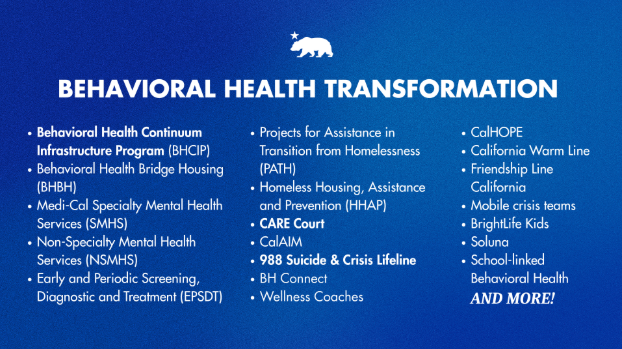
Proposition 1 and BHCIP fit within a broader behavioral health strategy, Mental Health for All, which reflects California’s continued commitment to responsibly invest public dollars to strengthen the state’s behavioral health system. Launched under Governor Newsom’s leadership, this bold initiative is building a stronger, more equitable, and more accountable behavioral health system for Californians across their lifespans.
From addressing the crisis of loneliness in young men through the state’s Path and Purpose Initiative, strengthening tools like the 988 suicide and crisis lifeline, expanding community mental health supports, building stronger prevention strategies, improving reentry through more robust reentry strategies, building more housing and support, creating stronger trauma and crisis response for children, investing in California’s behavioral health workforce, and establishing a first-in-the-nation CARE Court process to help people with severe mental illness get treatment, Governor Newsom is repairing a broken system that has suffered from decades of neglect.
This neglect began under then-Governor Reagan’s administration, when state hospitals were closed, and no adequate alternative was provided, leaving people most in need of help to fall into the criminal justice system or homelessness. This created a generational impact.
Today, across California, individuals with untreated psychosis are 10 times more likely to experience homelessness and 16 times more likely to be incarcerated. Through the many programs and strategies of California’s strong behavioral health continuum, the state is turning this crisis around.
Addressing mental health and homelessness
Governor Newsom is the first Governor to make addressing homelessness — an issue decades in the making — a top priority. Since taking office in 2019, the Governor has created unprecedented policy and structural changes in state government to help California better address its housing and homelessness crises, including additional and unprecedented support for local governments, stronger accountability and enforcement, transformational changes to mental health services and state government, and groundbreaking reforms to create more housing, faster than ever before.
Together, these efforts have helped California achieve a two-year drop in homelessness, with preliminary estimates showing unsheltered homelessness declining for the second consecutive year — down nearly 13% since 2024.
More accountability
Californians can track how their community is addressing mental health, homelessness, and housing at accountability.ca.gov.