
From Paradise to Antalya: Governor Newsom and First Partner open COP31 with global wildfire exchange in Türkiye
Home to the world’s largest aerial firefighting fleet, California brings its globally recognized wildfire expertise to Türkiye, joining international partners to strengthen prevention, preparedness, and response
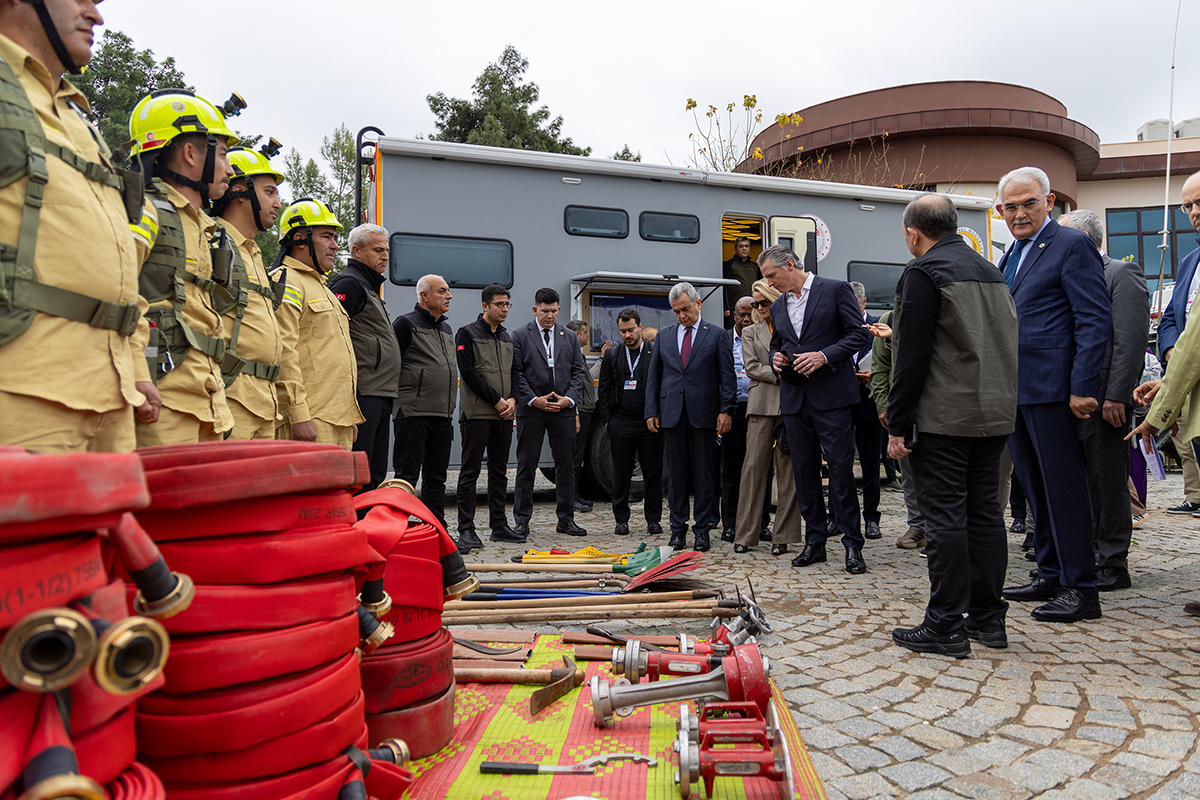
Governor Gavin Newsom and First Partner Jennifer Siebel Newsom view firefighting equipment alongside trainee firefighters at Türkiye’s International Forestry Training Centre
What you need to know: Governor Gavin Newsom and First Partner Jennifer Siebel Newsom began their first day at COP31 at Türkiye’s International Forestry Training Centre, where they toured firefighting simulators and training grounds, met trainee firefighters, and joined the UN Food and Agriculture Organization, the Under2 Coalition and leaders of states and regions from around the world to share what’s working in wildfire prevention and response.
SACRAMENTO – Governor Gavin Newsom and First Partner Jennifer Siebel Newsom opened their first day at COP31 at Türkiye’s International Forestry Training Centre, joining the UN Food and Agriculture Organization (FAO), the Under2 Coalition and governors from around the world for a high-level exchange on wildfire resilience. The visit set the tone for California’s week at the UN climate conference: with the Trump administration willfully absent, California is showing up as a reliable partner, sharing what’s working and learning from others confronting the same climate threats.
Home to the world’s largest aerial firefighting fleet and pioneering technologies that detect, track and fight wildfires, California is a globally recognized leader in wildfire prevention and response. The visit brought together leaders confronting the same growing climate threats to exchange expertise, strengthen international cooperation and share innovations that save lives and protect communities. With the Trump administration absent from the summit, California is continuing to engage with international partners on climate resilience.
Every fire season, communities in California and Türkiye are asked to do the impossible. What we saw here today, from the training and technology to the courage of these young firefighters, is how you meet that challenge. No state or nation can face this alone, and California is proud to stand with states, regions and communities around the world in this fight.
Governor Gavin Newsom
Wildfire doesn’t stop at borders, and neither does the courage of the people who fight it. Meeting these young firefighters, I was reminded that the women and men on the front lines are protecting families and futures, here in Türkiye and at home in California. When we learn from one another, every community is safer.
First Partner Jennifer Siebel Newsom
Operated by Türkiye’s General Directorate of Forestry since 2011, the center is a regional hub for wildfire training, preparing forestry professionals and firefighters in wildfire prevention, suppression, and post-fire restoration. With support from the FAO, it is expanding its international training programs, using advanced simulators that let incident commanders practice fighting fires across shifting weather, terrain, and vegetation.
The same fight, half a world away
Governors and regional leaders from across the globe compared notes on what works, from forest management to frontline firefighting, weighing Türkiye’s experience alongside California’s and others’ while recognizing differences in governance, resources, and landscapes. They discussed practices they could adapt at home and opportunities for continued cooperation, including technical exchanges and training.
California brought significant experience to the exchange. Under Governor Newsom, the state has invested more than $5 billion in wildfire and forest resilience, assembled the world’s largest aerial firefighting fleet, and deployed cutting-edge technologies to detect and respond to fires faster. From first-in-the-nation real-time fire mapping to satellite detection and AI-assisted firefighting, California’s innovations are helping reshape how communities prepare for and respond to increasingly destructive wildfires.
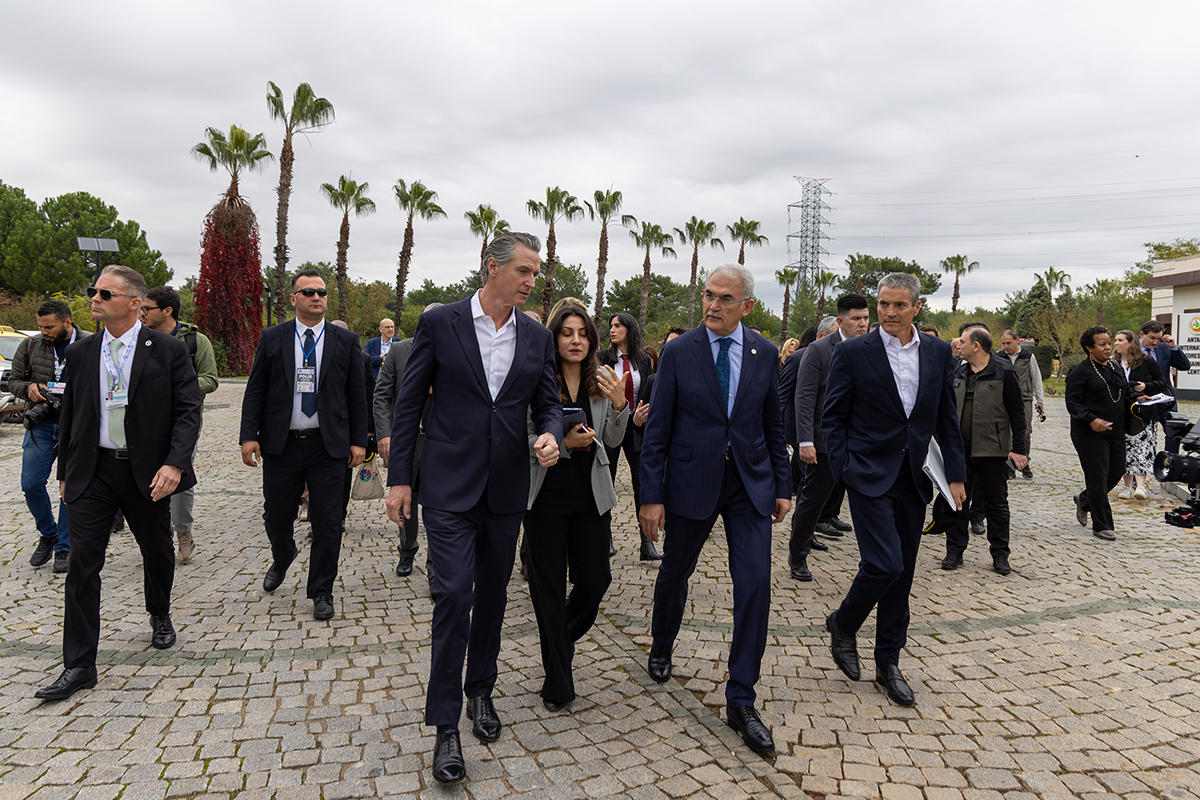
Governor Gavin Newsom walks with Bekir Karacabey, Türkiye’s Director General of Forestry, and California Natural Resources Agency Secretary Wade Crowfoot during a tour of the International Forestry Training Centre in Antalya.
Governor Newsom recalled the 2018 Camp Fire, which destroyed the town of Paradise, and noted the experience California and Türkiye share. This summer, Türkiye fought large-scale wildfires that burned nearly 20,000 hectares over the course of a few days in July and September alone, and about 15 million hectares of the country’s forested land remain under threat.
Like California, Türkiye has invested heavily in forest management, firebreaks and clearing while strengthening its firefighting capabilities and crews.
“I feel like I’m home. Everything you are doing is so familiar,” said Governor Newsom to the group, describing California’s investments in forest management and firefighting. Reflecting on the extraordinary natural beauty and growing wildfire risk that California and Türkiye share, he said it is “what brings us all together. This is real. This is humbling, and this is hard work.”
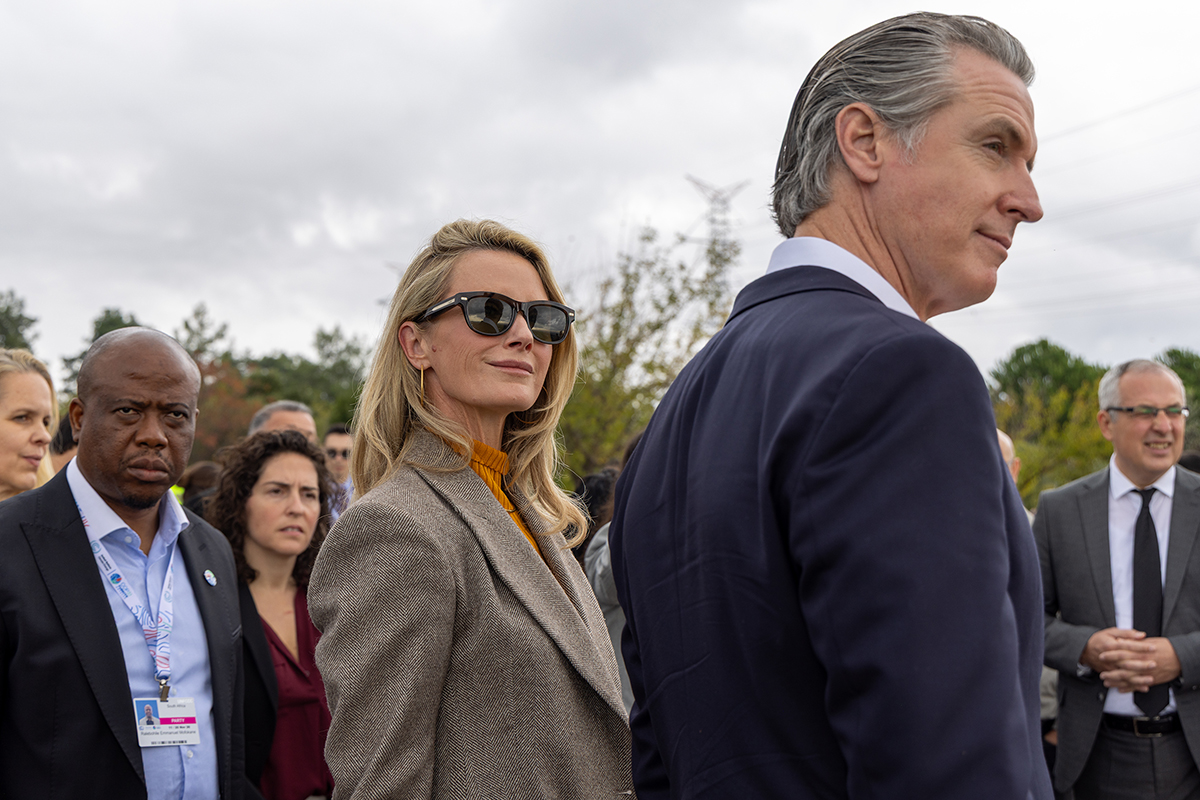
Governor Gavin Newsom and First Partner Jennifer Siebel Newsom tour the International Forestry Training Centre with Türkiye’s Director General of Forestry, Bekir Karacabey.
Inside a global wildfire training hub
Governor Newsom and the First Partner toured the center with Bekir Karacabey, Türkiye’s Director General of Forestry. The 50-hectare campus, set on the edge of a forest, includes training rooms, firefighting and flight simulators, and advanced driving courses for large fire trucks and other vehicles. The Governor and First Partner met about three dozen trainee firefighters during the visit.
The center’s training grounds give crews hands-on experience with the fire engines, hoses and hand tools they rely on in the field, preparing them for the fast-moving fires that increasingly threaten communities across the region.
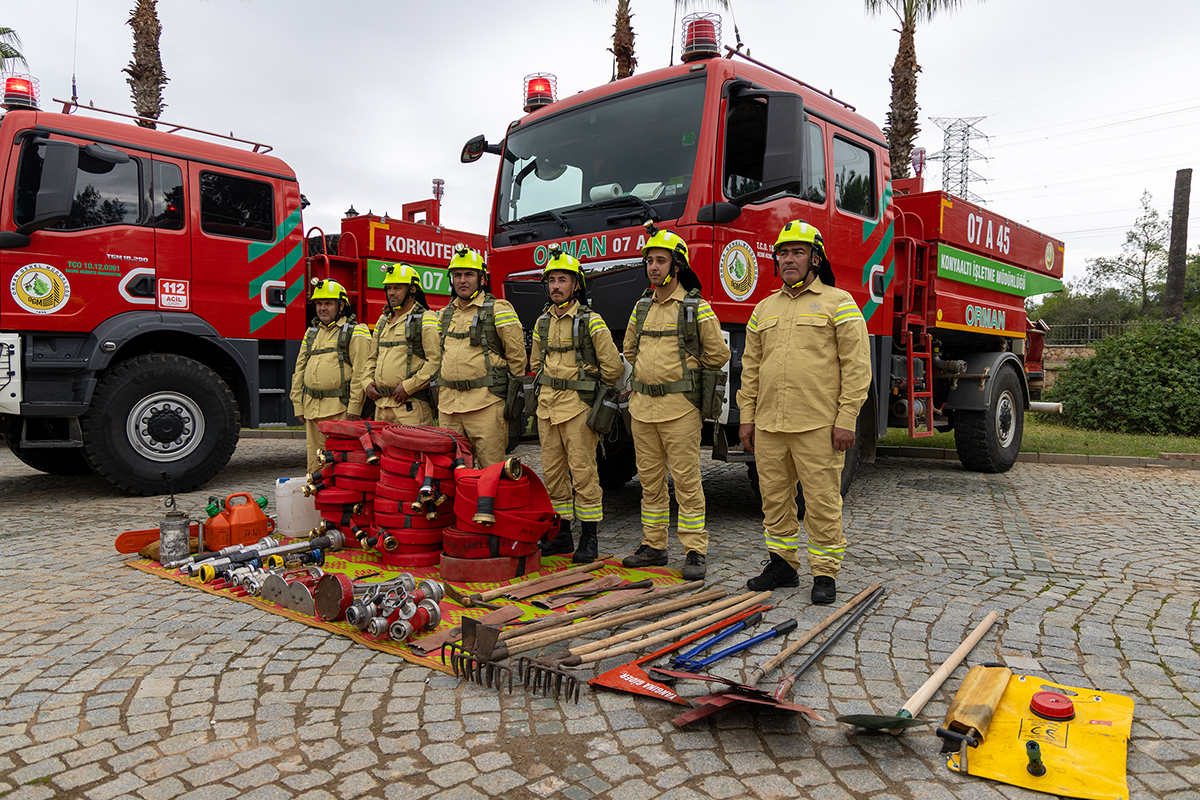
Trainee firefighters at Türkiye’s International Forestry Training Centre, which prepares crews for wildfire prevention and response.
Much like California’s operation, the Antalya, Türkiye, center includes a Forest Fire Fighting Training Simulator, which allows forest engineers and incident commanders to simulate wildfire scenarios under varying weather, vegetation and terrain conditions. Trainees can model fire behavior, deploy resources, evaluate suppression strategies and practice emergency coordination. A UN Food and Agriculture Organization partnership with Türkiye is expanding the center’s international training capabilities, particularly in Central Asia and the Caucasus.
How California is fighting fire
California co-founded the Under2 Coalition in 2015 to bring states and regions together on climate action, and today that partnership is helping governments share lessons on one of the most urgent climate threats they face.
Since 2019, the Newsom administration and the Legislature have invested more than $5 billion in wildfire and forest resilience, and the Governor recently signed legislation to speed up wildfire prevention projects and harden communities against future disasters. Over the past five years, CAL FIRE has added an average of 1,800 full-time and 600 seasonal positions each year, and it will keep hiring firefighters, natural resource professionals, and support staff to meet growing demands.
California is also investing in the tools that save lives and homes:
-
Real-time intelligence: The first-in-the-nation Fire Integrated Real-Time Intelligence System (FIRIS) has flown more than 2,000 missions since 2019, mapping fires within minutes of ignition.
-
Forecasting the threat: The state’s Wildfire Forecast & Threat Intelligence Integration Center is a first-of-its-kind hub for wildfire forecasting, weather intelligence and fire threat assessments.
-
The world’s largest aerial firefighting fleet: California is the first state to own and operate C-130H airtankers for wildfire suppression, with four in service and seven planned.
-
Early detection from space: CAL FIRE partnered with the Earth Fire Alliance on FireSat, whose first three wildfire detection satellites launched in June to help firefighters spot fires sooner.
-
Mapping wildfire risk: Statewide 3D LiDAR maps give decision-makers a clear picture of fuel loads and wildfire risk.
-
Harnessing AI: The state is testing AI-guided drones that can support firefighting in low visibility, when crewed aircraft cannot fly.
California at COP31
COP31 is the 31st Conference of the Parties to the United Nations Framework Convention on Climate Change, an annual global climate conference that brings together world leaders, scientists, businesses, non-governmental organizations, and civil society to advance action on climate change. Held in Antalya, Türkiye, from November 9–20, 2026, the conference is hosted by Türkiye, with Australia leading the negotiations. This year’s focus is on implementation: turning climate commitments into concrete, measurable results.
As a founding member of the Under2 Coalition and the U.S. Climate Alliance and as co-chair of America Is All In, California is demonstrating how states and regions can sustain international cooperation, accelerate clean energy, and deliver climate solutions that lower costs, create jobs, and strengthen resilience, even as the federal government retreats.
California’s delegation includes Governor Gavin Newsom; First Partner Jennifer Siebel Newsom; California Natural Resources Agency Secretary Wade Crowfoot; California Department of Food and Agriculture Secretary Karen Ross; California Public Utilities Commission President John Reynolds; California Air Resources Board Chair Lauren Sanchez; and Governor’s Office of Land Use and Climate Innovation Director Samuel Assefa.
California’s climate leadership
Since Governor Newsom took office in 2019, California has added more than 39,000 megawatts of utility-scale clean energy to serve the California grid. That’s helped make the grid more reliable and pushed the state further along its path in the clean energy transition.
The most recent numbers, from the end of 2024, show real progress: 67% of retail electricity sales in the state already come from clean energy. Last year, clean energy met 100% of the state’s electricity needs for at least part of the day on 279 separate days.
Solar and battery storage have been a key part of that progress, and are changing how California keeps the lights on. Since 2019, battery resources serving California grew from fewer than 700 megawatts to more than 23,000 megawatts — an increase of more than 3,100%. Batteries store solar power when it is abundant and deliver it after sunset. That reduces how often the state needs to run natural gas plants, which cuts air pollution and supports a more cost-effective electricity system.
California’s approach is also where the money is heading. Global investors are now putting roughly two dollars into clean-energy technology for every dollar that goes into fossil fuels. California is leading that shift while Donald Trump watches from the sidelines.
For California, that means investing in the good-paying jobs of the future. The Golden State is the 4th-largest economy in the world and leads the nation in total clean energy jobs, with 552,300 workers employed across clean energy technologies, nearly twice as many as the second-ranked state, Texas, according to a 2025 report from E2. California’s clean energy workforce grew by nearly 7,300 workers in 2024, outpacing job growth in the rest of the state’s economy by more than three times.
California’s global climate network
California has long been a key player on the international stage, from taking joint action on climate change to identifying new pathways and partnerships for sustained economic growth. During the Newsom administration alone, California has formed over 70 international partnerships that lay critical groundwork for our continued economic success, while prioritizing workers and businesses that benefit from these new opportunities.
Golden State and global partnerships
-
United Kingdom (2026): California and the United Kingdom signed a memorandum of understanding to tackle climate change and promote sustainable development together. The memorandum of understanding builds on an already strong history of cooperation, and focuses on areas for collaboration including clean energy technologies, climate resilience, decarbonizing transportation, and protecting the natural environment.
-
Chile (2025): California and Chile signed a memorandum of understanding regarding exchanging information, developing best practices, and cooperating on methane emissions reduction. Methane is a highly potent greenhouse gas, and the partnership between California and Chile opens up new opportunities for both partners to cooperate on methane reduction in waste, agriculture, and energy sectors.
-
Colombia (2025): California and Colombia signed a partnership to advance joint efforts on forest conservation, methane reduction, climate resilience, and clean energy development. The memorandum of understanding deepens coordination on protecting the Amazon, strengthening biodiversity, and expanding nature-based climate solutions that support sustainable and equitable economic growth.
-
Nigeria (2025): California signed a memorandum of understanding with Nigeria on sustainable urban transportation, green ports, low-carbon transportation fuels, climate adaptation, methane detection and abatement policies, greenhouse gas emissions and air quality, and academic exchange and university partnerships. The partnership will build upon our shared commitment to sustainable growth, accelerate the transition to zero-emission transportation, and expand opportunities for the next generation.
-
Brazil (2025): California signed a memorandum of understanding with the Brazilian federal government to scale up cooperation on climate, clean energy, cutting pollution, and job-creating climate opportunities. This new partnership, announced in September 2025, will advance market-based carbon pricing programs, expand clean transportation, including zero-emission vehicles and low-carbon fuels, and strengthen air quality management through enhanced monitoring and regulatory controls. The partnership also focuses on conserving 30% of lands and coastal waters by 2030, including nature-based solutions and biodiversity protection. In 2025, California also advanced a partnership with the State of Pará to strengthen cooperation on wildfire prevention and response — enhancing forest monitoring, identifying areas most at risk, and sharing research and expertise to improve firefighting and emergency management.
-
Kenya (2025): California signed a partnership focused on cutting pollution and supporting trade. The partnership advances medium- and long-term low-carbon development, policy research, development, and innovation in sustainable land use and urban planning that reduces long commutes and urban sprawl, while promoting integrated land use and transport systems.
-
Noord-Holland (2024): California and Noord-Holland signed a Letter of Intent advancing next-generation air mobility — from drones to zero-emission aircraft. Joint innovation missions are producing pilot projects that inform California’s Advanced Air Mobility Implementation Plan and readiness for major global events.
-
Australia (2023): California signed a memorandum of understanding (MOU) with Australia that helped inform the country’s first-ever vehicle carbon emissions standards through input from the California Air Resources Board. The California Public Utilities Commission and California ISO have also advised Australia on electricity market reform to better align incentives for renewable energy.
-
British Columbia (2023): California and British Columbia signed a memorandum of understanding on mutual wildfire assistance that is delivering results. British Columbia sent incident management experts to support California’s Palisades Fire in 2025, while CAL FIRE deployed personnel during British Columbia’s 2025 fire season. These exchanges established a lasting framework for cross-border wildfire support.
-
China (2023): California signed five Memoranda of Understanding (MOUs) with China’s National Development and Reform Commission, the provinces of Guangdong and Jiangsu, and the municipalities of Beijing and Shanghai to advance cooperation in cutting greenhouse gas emissions, transitioning away from fossil fuels, and developing clean energy.
-
Denmark (2021): California and Denmark signed a memorandum of understanding to collaborate on groundwater mapping, leak detection, and water efficiency, which has modernized California’s data systems and informed key state programs, like the Airborne Electromagnetic Survey. Danish technologies and expertise have helped strengthen drought and water-supply resilience statewide.
-
Mexico (Baja California & Sonora): California signed Memoranda of Understanding (MOUs) with the Mexican states of Baja California and Sonora to advance zero-emission freight corridors, clean ports, and battery manufacturing — strengthening North American supply chains and workforce readiness. Joint forums have already produced new research collaborations and training programs advancing clean-tech.