
A firefighting force nearly doubled: Governor Newsom marks CAL FIRE’s newest leaders and fifth C-130 airtanker as California stands ready
29 new Company Officers graduate from CAL FIRE’s 15th leadership academy of 2026, joining more than 3,600 emergency response leaders since 2019
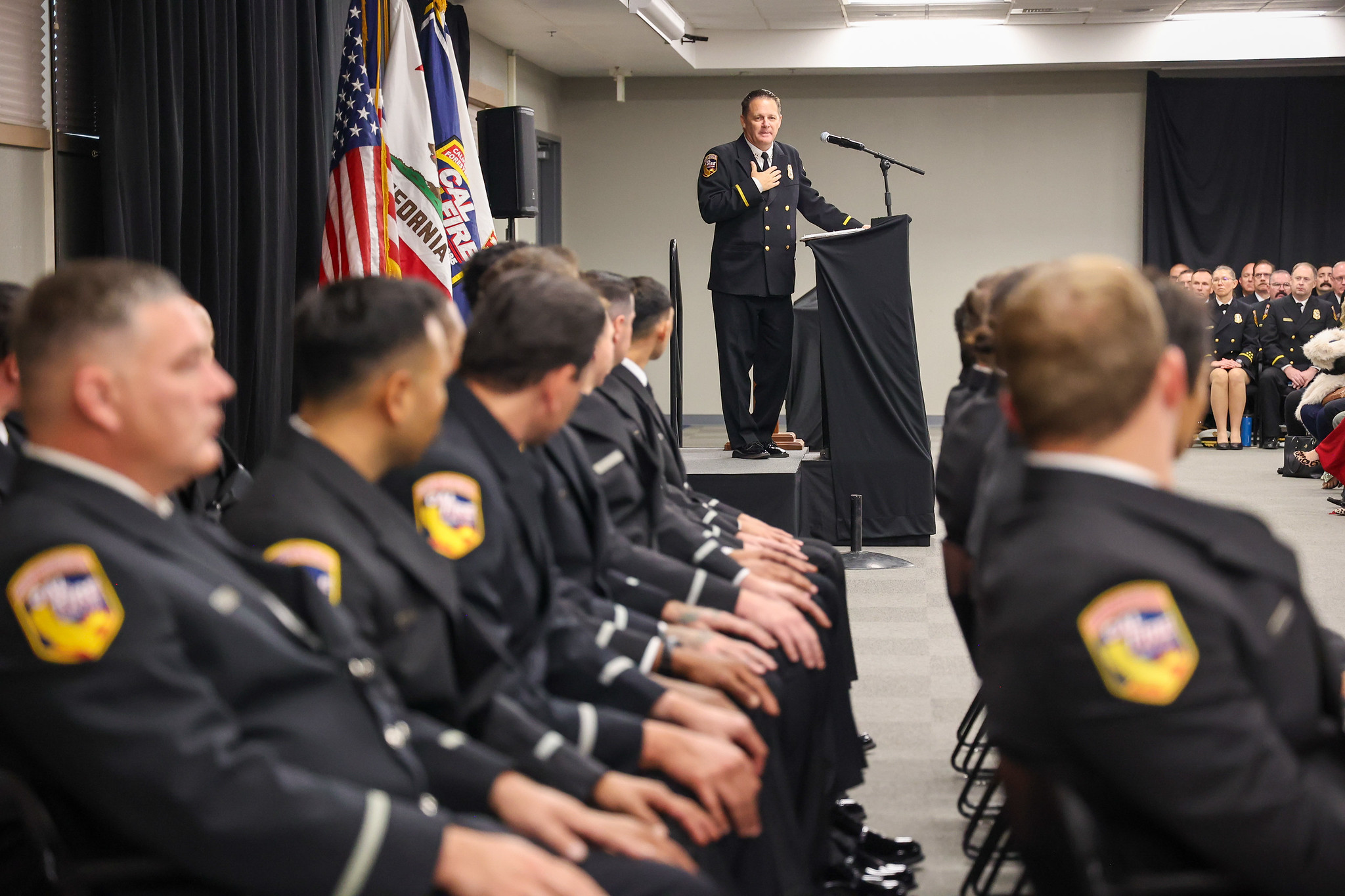
CAL FIRE’s newest leaders at their graduation ceremony in Ione, Nov. 13, 2026.
What you need to know: CAL FIRE graduated its final class of Company Officers for 2026 last week, and California’s fifth C-130 Hercules airtanker is now fire-mission-ready. Both milestones grew out of nearly eight years of steady investment under Governor Newsom, who has nearly doubled the state’s firefighting ranks. For Californians, that means a faster, stronger response the moment a fire starts, and more fires stopped while they are still small.
SACRAMENTO – Governor Gavin Newsom today marked two milestones that show how far California’s wildfire readiness has come. Last week, 29 new CAL FIRE Company Officers graduated from the department’s final leadership academy of 2026, bringing this year’s total to 534. And the state’s fifth C-130 Hercules airtanker has entered service, expanding the nation’s first state-owned C-130 firefighting fleet and the largest aerial firefighting fleet in the world.
Each milestone tells part of a larger story. Climate change has made California hotter and drier, and its fire seasons longer and more destructive. After living through some of the deadliest fires in its history, California chose to build a firefighting force equal to that new reality, and it has spent nearly eight years doing exactly that.
When I took office in the wake of the Paradise tragedy, we committed to never again asking our firefighters to do more with less. Since then, we’ve nearly doubled CAL FIRE’s ranks and built the largest aerial firefighting fleet in the world. But fire has tested us every step of the way, from the 2020 fire siege to the Los Angeles firestorms, and too many families are still rebuilding. Keeping every community safe is what drives us to keep pushing the boundaries, to keep innovating, and to keep delivering solutions.
Governor Gavin Newsom
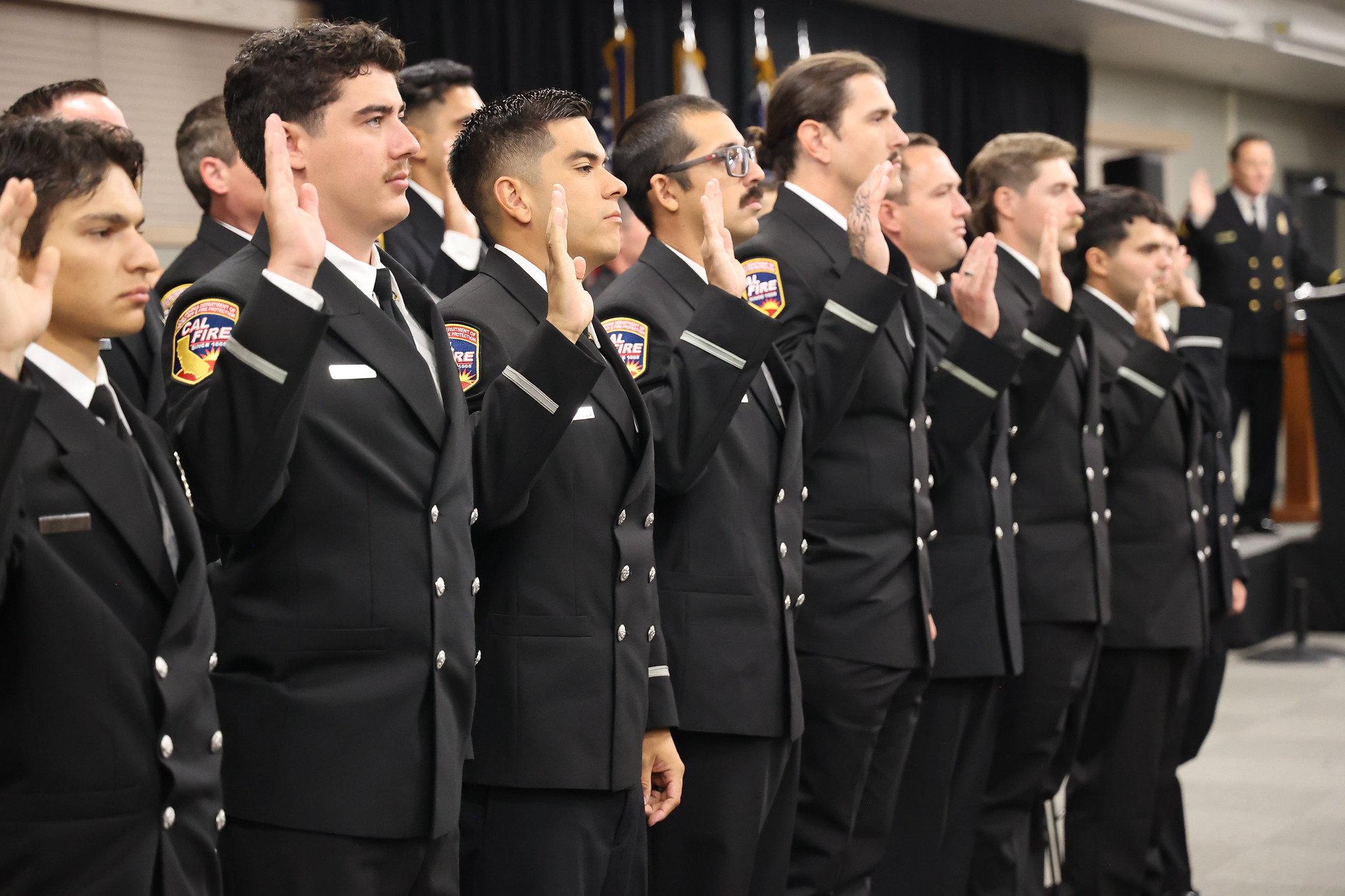
CAL FIRE’s newest leaders take the oath at their graduation ceremony in Ione, Nov. 13, 2026.
Investing in the firefighting force that protects California
That work began with the firefighters themselves. Last week, 29 CAL FIRE Company Officers graduated, marking the department’s final Company Officers Academy graduation of 2026. With this latest class, CAL FIRE has graduated 534 Company Officers across 15 academies this year, joining more than 3,600 emergency response leaders who have stepped into those roles since 2019. These leaders are responsible for managing crews and coordinating emergency response operations on the ground.
“Being always ready means more than having firefighters and equipment standing by. It means investing in our people, developing new capabilities, embracing innovation and building partnerships that make us stronger,” said CAL FIRE Director/Fire Chief Joe Tyler. “The investments we have made are transforming how we prepare for and respond to emergencies, helping us protect lives, property and natural resources throughout California and supporting communities well beyond our state.”
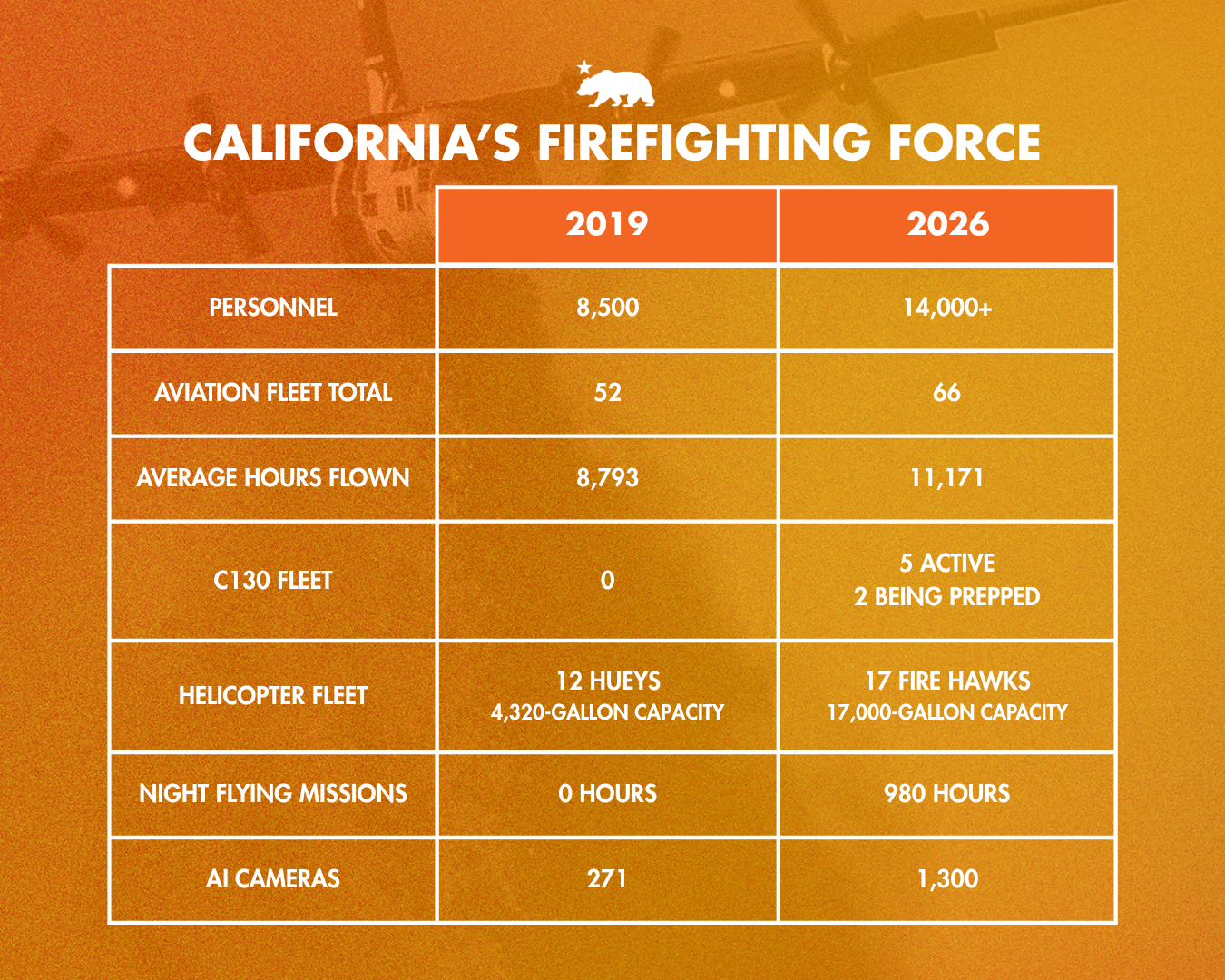
Under Governor Newsom’s leadership, and in partnership with the Legislature, CAL FIRE’s fire protection workforce has grown from 8,000 positions in 2019 to 14,000 + today. That is nearly double, backed by a fire protection budget that has grown from $2 billion to $3.8 billion. Over the past five years, CAL FIRE has added an average of 1,800 full-time and 600 seasonal positions each year, nearly double the pace of the previous administration.
The 2020 fire siege, the biggest wildfire year in state history, pushed that growth further. In the years that followed, California added more than 2,500 permanent positions and stretched the peak staffing season for seasonal firefighters from six months to nine.
The budget for the California Governor’s Office of Emergency Services (Cal OES), which coordinates the mutual aid system that sends local fire crews wherever they are needed and manages more than 270 state-owned fire engines, has also grown from $1.6 billion to $3.3 billion. More than 400 California National Guard members also serve under CAL FIRE through Joint Task Force Rattlesnake, supporting fuel reduction projects, firefighting, and community protection year-round.
Training tomorrow’s leaders
A larger workforce needs strong leaders, so CAL FIRE more than tripled its training capacity, from about 700 graduates a year to more than 2,200. New training centers opened in Redding in 2023 and Atwater in 2025, joining Ione and Riverside.
The state is also building the next generation of firefighters. Partnered crews with the California Conservation Corps have grown nearly 450%, and more than 1,000 young adults trained by the Corps have gone on to CAL FIRE jobs. In 2025 alone, CCC fire crews responded to 355 wildfires, including the Palisades and Eaton fires, logging more than 415,000 emergency response hours.
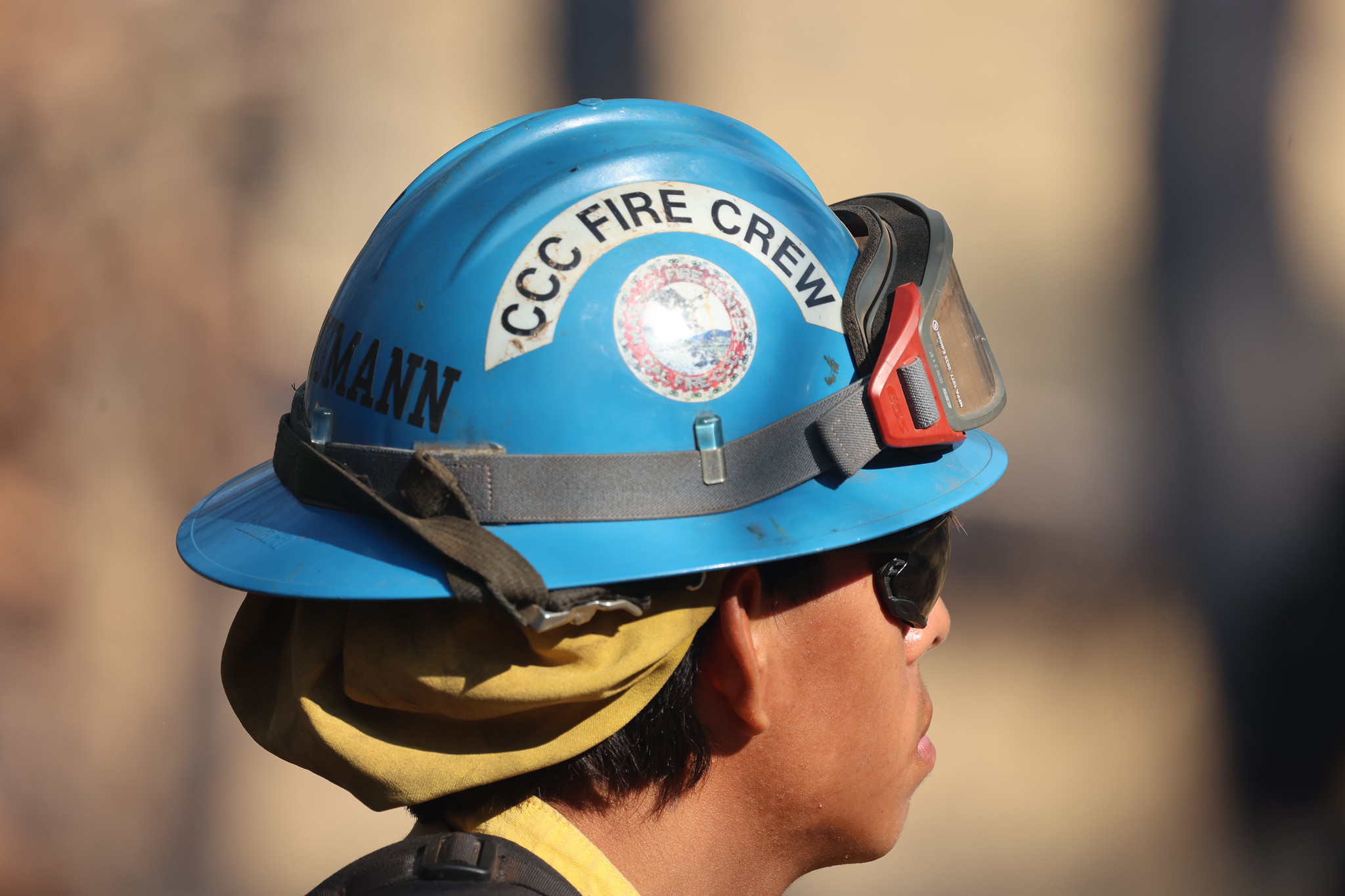
CCC crews work alongside CAL FIRE year-round on wildfire response and forest health projects.
In California, there is no longer an off-season for wildfire. CAL FIRE’s newest leaders and its newest airtanker head into the winter months ready for whatever comes.
The world’s largest aerial firefighting fleet
A bigger, better-trained workforce needs tools to match, and those tools start in the sky. The newest is California’s fifth C-130, which joins the largest aerial firefighting fleet in the world.
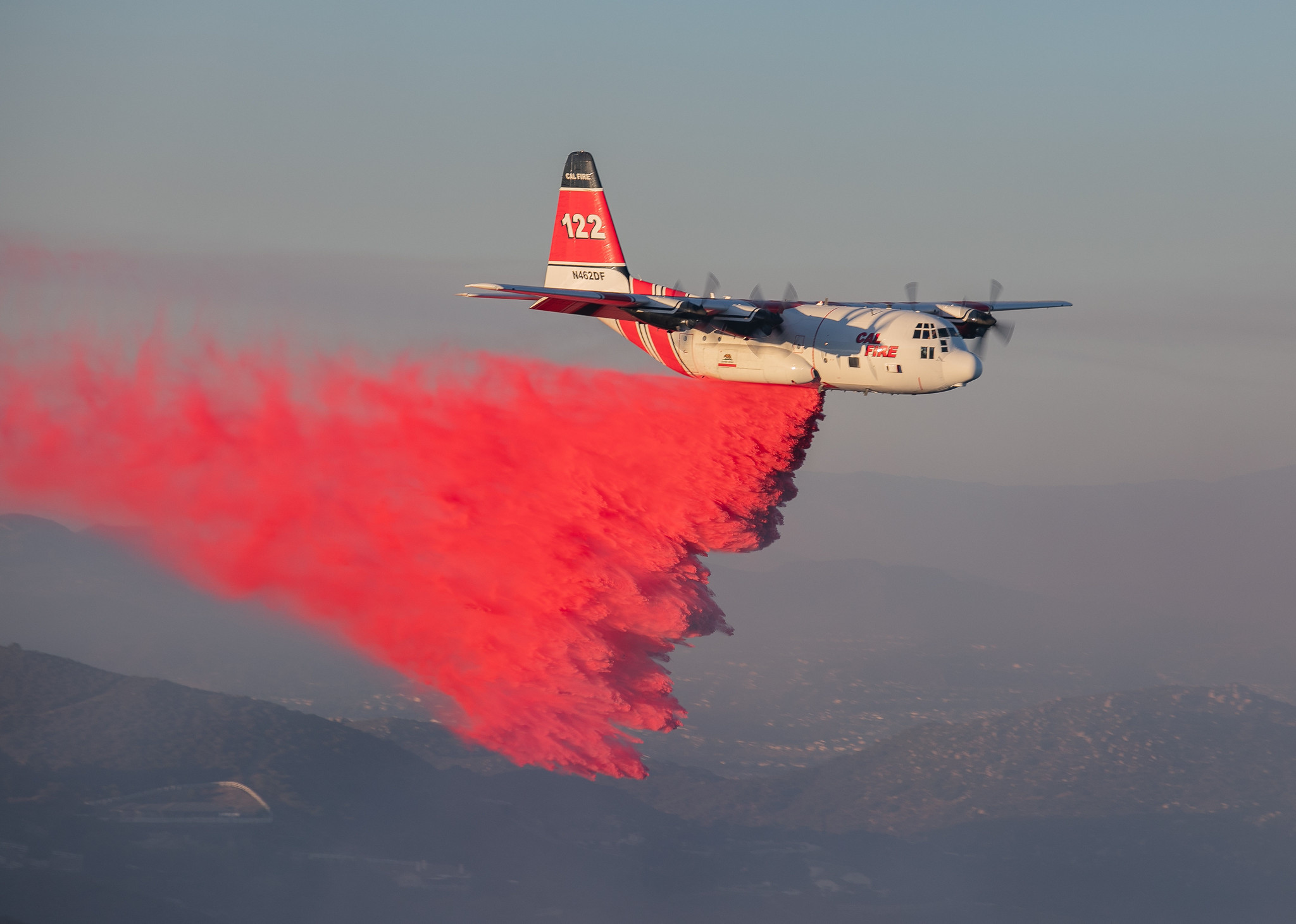
CAL FIRE Tanker, a C-130H Hercules airtanker, drops fire retardant
Each C-130 can drop up to 4,000 gallons of retardant in a single pass, enough to slow a fast-moving fire and buy crews on the ground time to get ahead of it. This year alone, the C-130 fleet has dropped nearly two million gallons of retardant and flown more than 500 hours on fire missions. Two more aircraft from the U.S. Coast Guard are being modified and are expected to join the fleet in 2027.
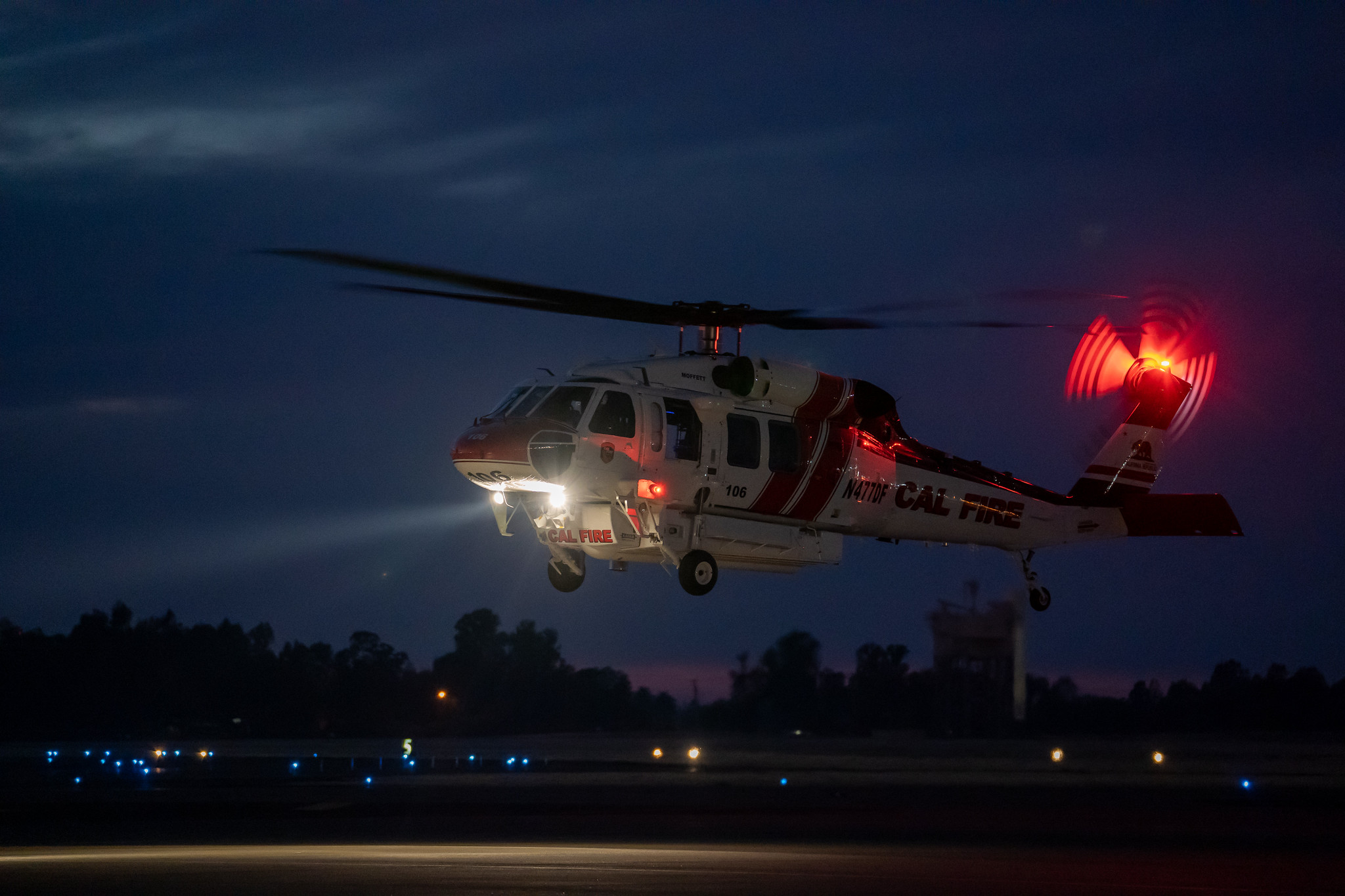
CAL FIRE Sikorsky S-70i Firehawk takes off at dusk. CAL FIRE crews logged nearly 980 hours of nighttime aviation operations in 2026. (Photo: CAL FIRE)
CAL FIRE has also retired its Vietnam-era Huey helicopters and replaced them with 17 Sikorsky S-70i Firehawks, the largest dedicated Firehawk fleet in the world. The new helicopters can fly after dark when conditions allow. In 2019, CAL FIRE flew no nighttime fire missions; in 2026, its crews logged 980 hours of nighttime aviation operations.
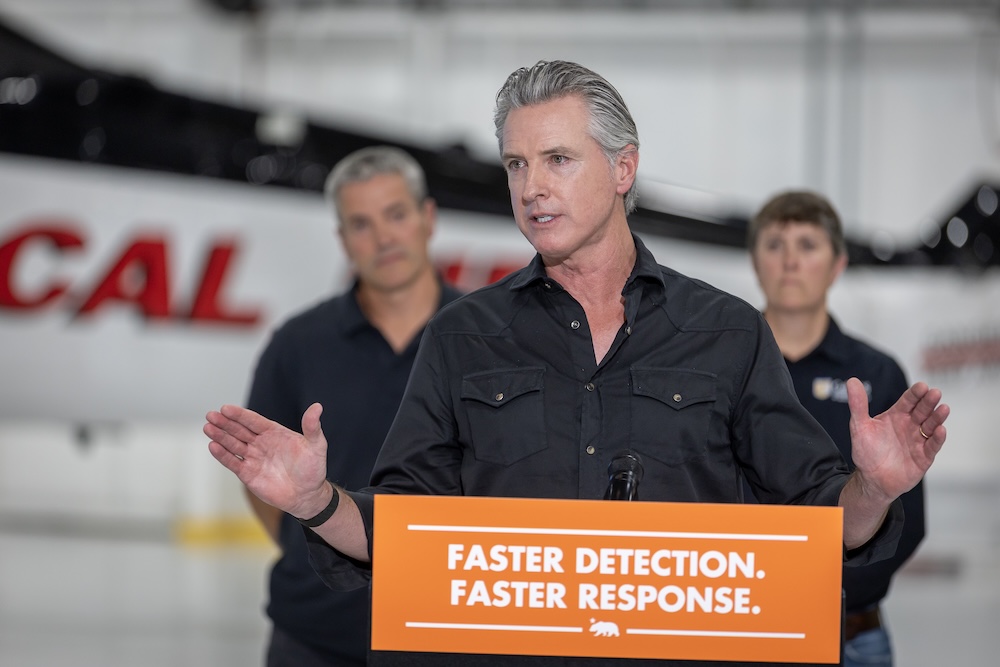
Governor Gavin Newsom highlights California’s investments in wildfire detection and response technology at McClellan Air Park in Sacramento on July 21, 2026.
Seeing fire sooner, and stopping it before it starts
The sooner a fire is spotted, the sooner crews on the ground and in the air can reach it, so California has invested just as heavily in early detection. In 2019, California had 271 AI-enabled cameras watching for wildfire. Today, the ALERTCalifornia network has more than 1,300. Those cameras have alerted CAL FIRE to about 3,600 fires, more than half of them before anyone called 9-1-1.
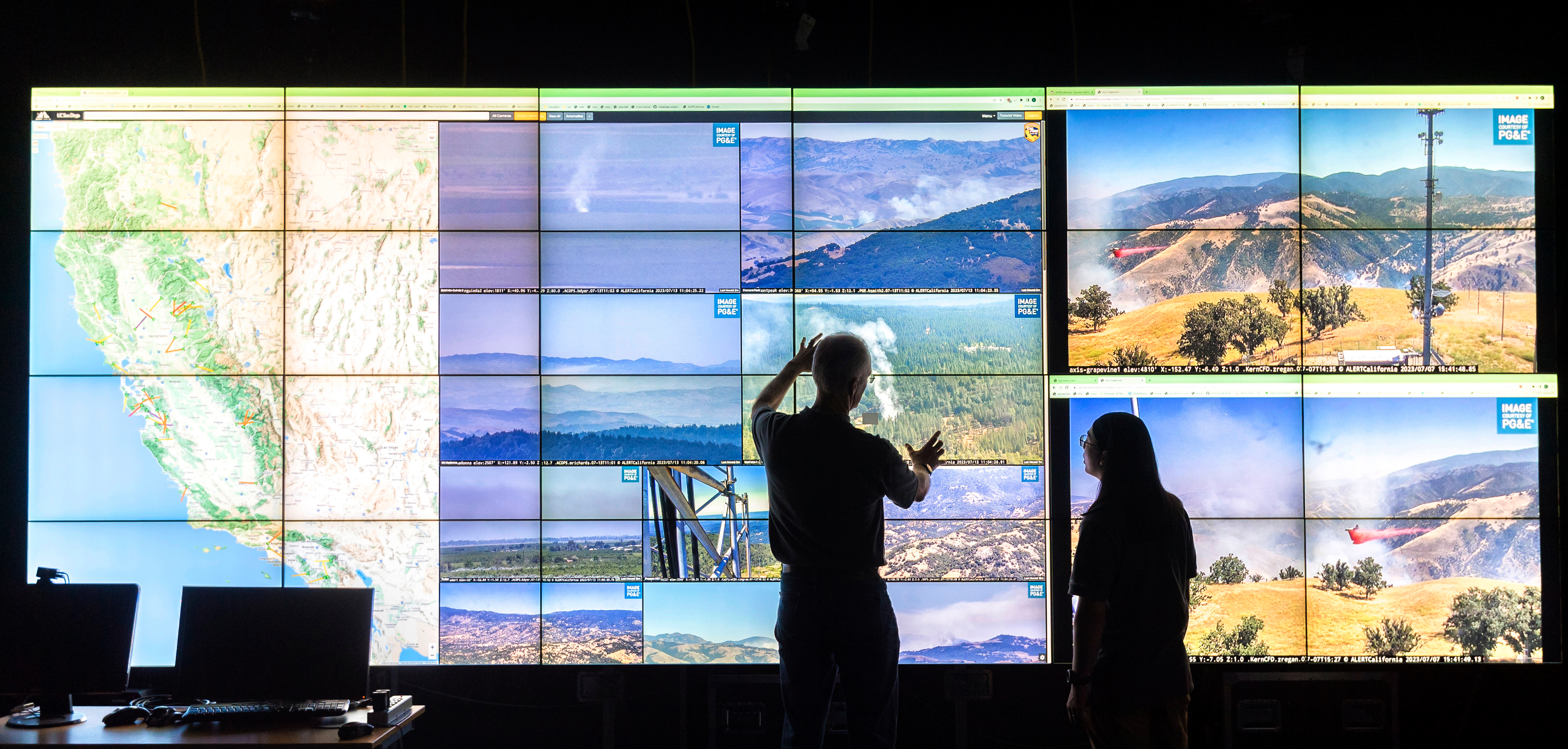
ALERTCalifornia’s more than 1,300 AI-enabled cameras watch for wildfire around the clock. (Photo: ALERTCalifornia | UC San Diego)
FIRE to about 3,600 fires, more than half of them before anyone called 9-1-1. Overhead, the first-in-the-nation Fire Integrated Real-Time Intelligence System, known as FIRIS, has flown more than 2,000 missions since 2019, mapping fires within minutes of ignition.
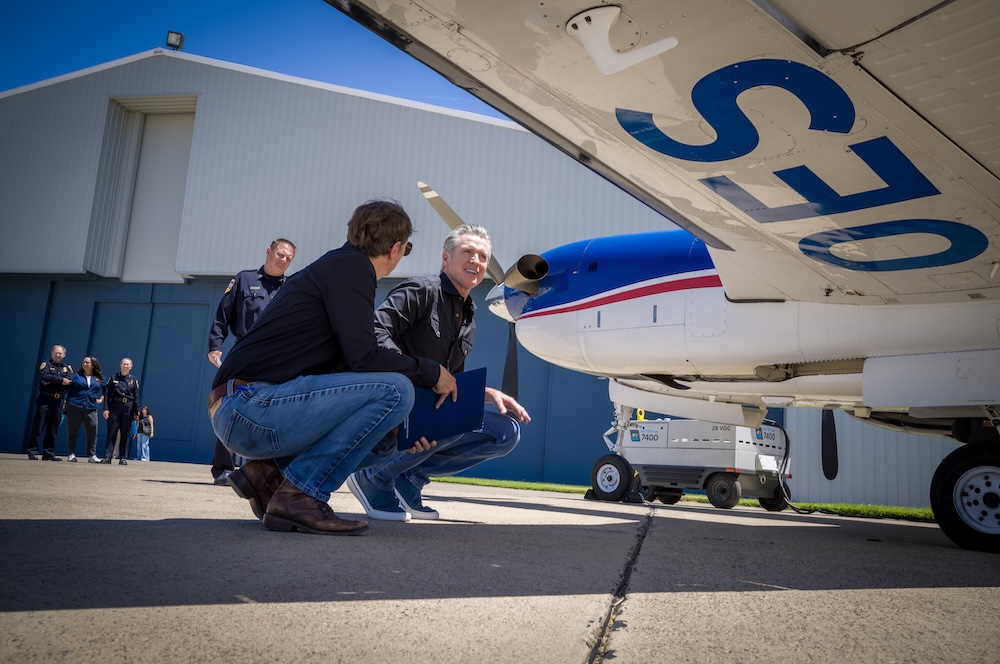
Governor Newsom and Cal OES Director Caroline Thomas Jacobs examine a FIRIS aircraft at McClellan Air Park in Sacramento on July 21, 2026.
In July, three FireSat wildfire-detection satellites launched from Southern California, giving firefighters a new way to spot fires from space. The surest way to protect a community, though, is to keep a fire from starting at all.
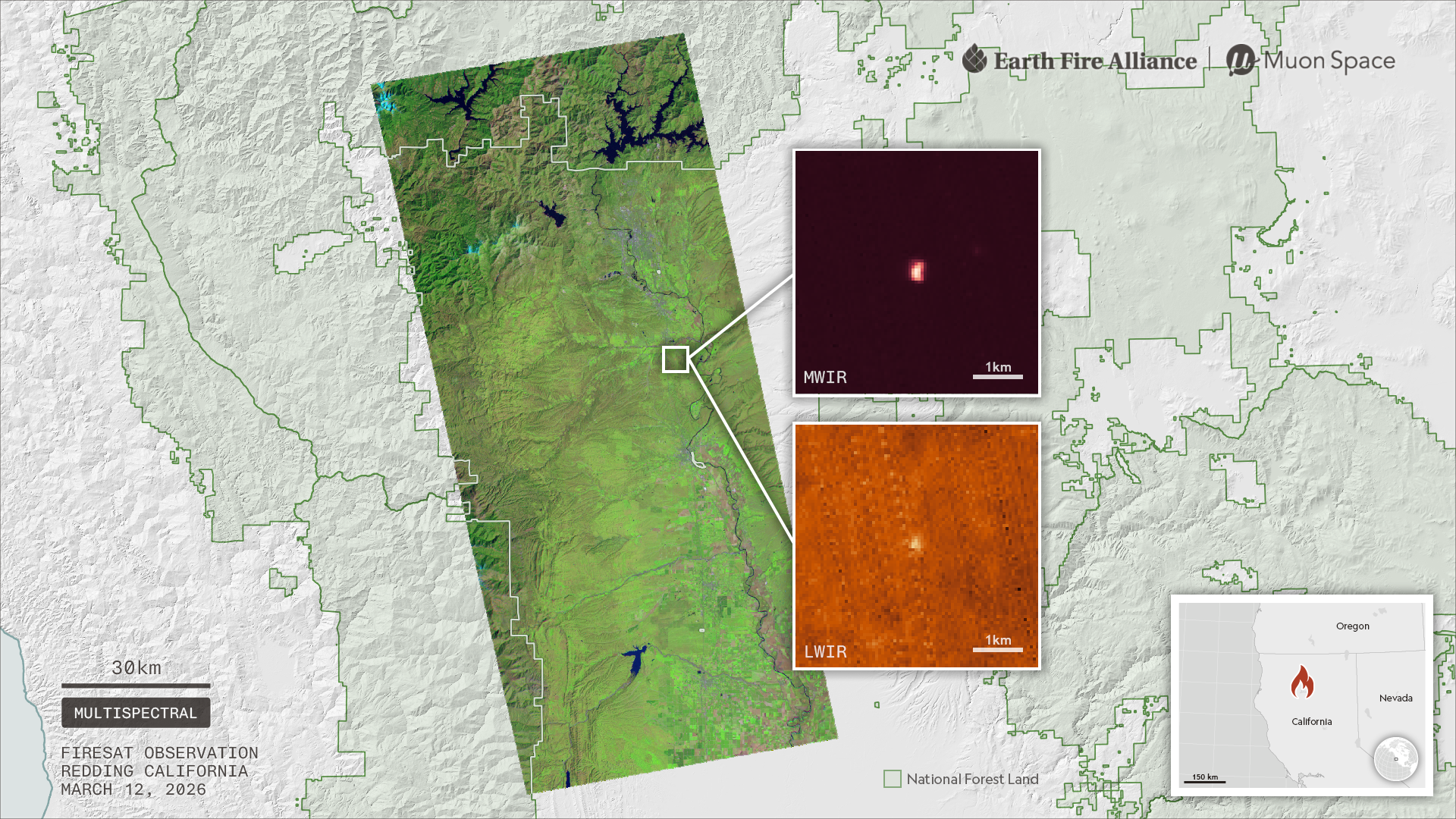
Shasta-Trinity National Forest, California, USA. (March 12, 2026| Earth Fire Alliance)
After the Los Angeles fires, Governor Newsom issued an emergency proclamation in March 2025 to speed up wildfire prevention work. Since then, the state has fast-tracked more than 500 prevention projects, cutting approval times from a year or more to as little as 30 days. In September, the Governor signed legislation writing that faster process into state law.
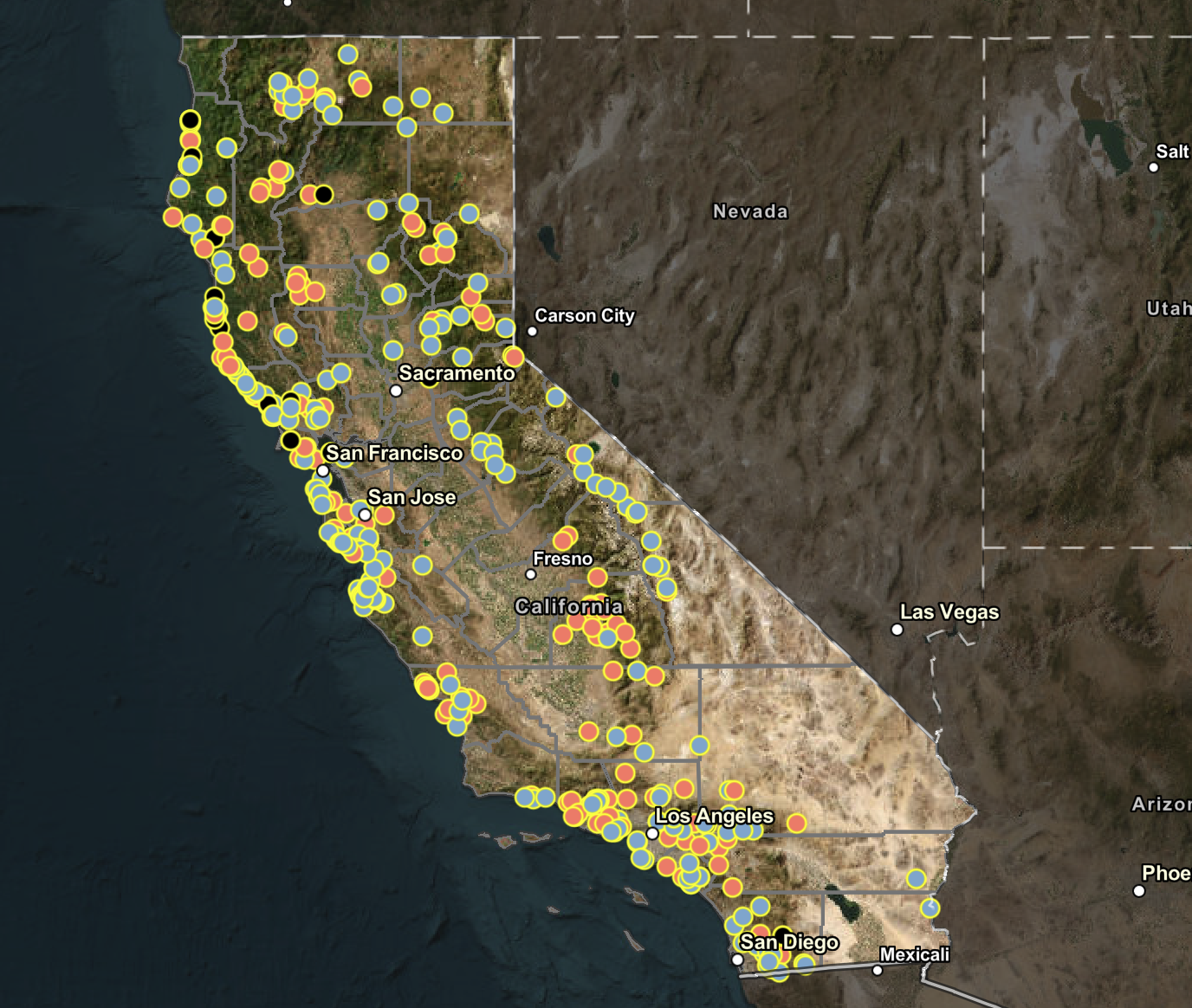
More than 500 prevention projects statewide. Explore the map.
The state has also invested more than $350 million in wildfire safety projects on federal lands, which make up 58% of California’s forestlands. Since 2019, Governor Newsom, with support from the Legislature, has invested more than $5 billion in wildfire and forest resilience.
Every one of these investments serves a single goal: keeping 95% of wildfires to 10 acres or less, so more fires are stopped while they are still small.
Helping our neighbors
California knows what it means to need help when fire comes, and what it means to give it.
That commitment showed up across the West this year. Between June and late August alone, California deployed 3,372 personnel and 258 pieces of equipment to support wildfire, flood, and earthquake response in 12 states and two countries, Venezuela and Colombia. About 200 local fire departments sent 2,921 firefighters and 172 fire engines through the state’s mutual aid system. In 2026, nearly 600 CAL FIRE personnel were deployed to 13 incidents, including wildfires from Oregon and Washington to Alaska and Texas. Every one of those deployments went out without reducing the state’s ability to protect communities at home.
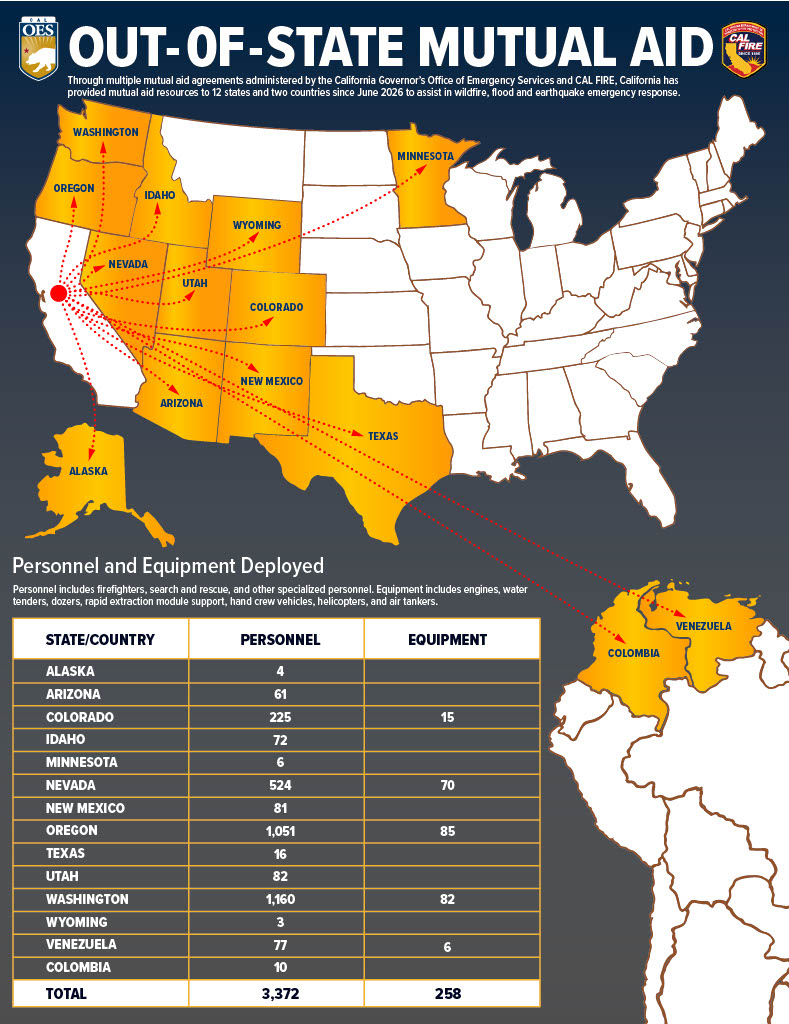
As Governor Newsom said in August, “In moments of disaster, the distance between us matters less than the duty we share.” That same duty has carried CAL FIRE crews to Hawaii and Canada since 2020, and cross-border agreements let California and Mexican fire agencies share crews and equipment on either side of the border.
That spirit extends to sharing what California has learned. This month, CAL FIRE co-hosted the first International Wildfire Convening at Stanford University, which brought together more than 120 participants from more than 19 countries across six continents.
Charting the next five years
California’s wildfire work is built to last. This year, Governor Newsom signed a landmark legislative package that creates a more durable, ongoing process to achieve the faster project reviews demonstrated through the Governor’s temporary wildfire streamlining measures, helping move critical wildfire mitigation work from planning to implementation more efficiently while maintaining environmental safeguards.
Building on those laws, the Wildfire and Forest Resilience Task Force has released California’s Wildfire and Landscape Resilience Action Plan, a five-year roadmap to protect communities and restore landscapes through 2031.
The plan builds on the progress California has made since it released the nation’s first comprehensive wildfire resilience action plan in 2021. Since then, Task Force partners have invested more than $6 billion in wildfire resilience, funded more than 2,200 wildfire safety projects and fast-tracked more than 540 projects, with approvals in as little as 30 days. The new plan sets out 119 actions to harden homes, strengthen local preparedness, expand beneficial fire, and help each region of the state tailor its approach to the risks it faces.