
One year after Los Angeles firestorms, California continues all-of-government community recovery efforts
State collaborates with local partners to accelerate rebuilding and meet needs
What you need to know: California continues to help survivors by building on efforts that have accelerated recovery and supported communities — working with on-the-ground partners to shape and adapt ongoing recovery efforts to meet local needs, honor victims lost, and help survivors heal.
LOS ANGELES – One year ago this week, California experienced a horrific and unprecedented disaster as hurricane-force winds and ultra-dry conditions spread wildfire through the populated Los Angeles region. Despite pre-positioned state assets and heroic efforts by local, state, and federal firefighters throughout the region battling a dozen dangerous wildfires, the ensuing firestorms created two massive urban conflagrations and resulted in the tragic death of 31 people in the Altadena and Palisades communities, the destruction of thousands of buildings and homes, and the displacement of families and businesses. Governor Gavin Newsom will continue this week to honor these victims, survivors, and first responders, reflecting on the disaster, California’s rapid response, and the progress made as the state works with local partners to shape historic recovery efforts.
As we begin this solemn week, we recognize a hard truth: recovery looks different for every family. Many are rebuilding. Others are still navigating how and whether to rebuild. Some are still grieving the losses of loved ones that will never fade. We see you, and we honor you. California is listening and shaping our recovery around real needs — accelerating rebuilding, supporting mental health, reopening businesses, and pressing the federal government to deliver. Our commitment is simple: we will keep showing up, and we will keep doing the work.
Governor Gavin Newsom
A historic firestorm disaster
On January 7, 2025, the Los Angeles region experienced exceptionally strong Santa Ana winter winds, coupled with the effects of a long dry season, making the region more susceptible to fire. Beginning with a fire in the mountains near the Palisades community, additional fires developed in the San Fernando hills, including in the Eaton Canyon near the Altadena communities. Firefighters on the ground battled hurricane-force winds carrying sparks and debris as aerial resources were grounded due to dangerous wind conditions.
In anticipation of these conditions, the Governor’s Office of Emergency Services on January 6, predeployed resources to Southern California and warned local communities, with the Governor prepositioning 65 fire engines, 7 water tenders, 7 helicopters, 9 dozers, 105 specialized personnel, and 45 additional crews, and coordinated with local governments. Anticipating greater threats of fire due to climate change, since 2019, Governor Newsom has expanded the state’s fire response, nearly doubling the CalFIRE budget from $2 billion to $3.8 billion, doubling CalFIRE personnel from 5,829 to 10,741, and increasing the budget for forest management, including prescribed fires, from $200 million in 2018 to $2 billion, plus an annual $200 million baseline.
Despite these efforts, in January 2025, a total of 12 fires broke out in Los Angeles region, stretching resources thin amid severe conditions and high winds. Making use of its longstanding mutual aid system, California continued to deploy additional emergency response assets. These deployments added to the resources the Governor deployed before the fires broke out — bringing totals to over 16,000 boots on the ground, including 2,500 National Guard members; 1,800 fire engines, water tenders, dozers, and 80 aircraft.
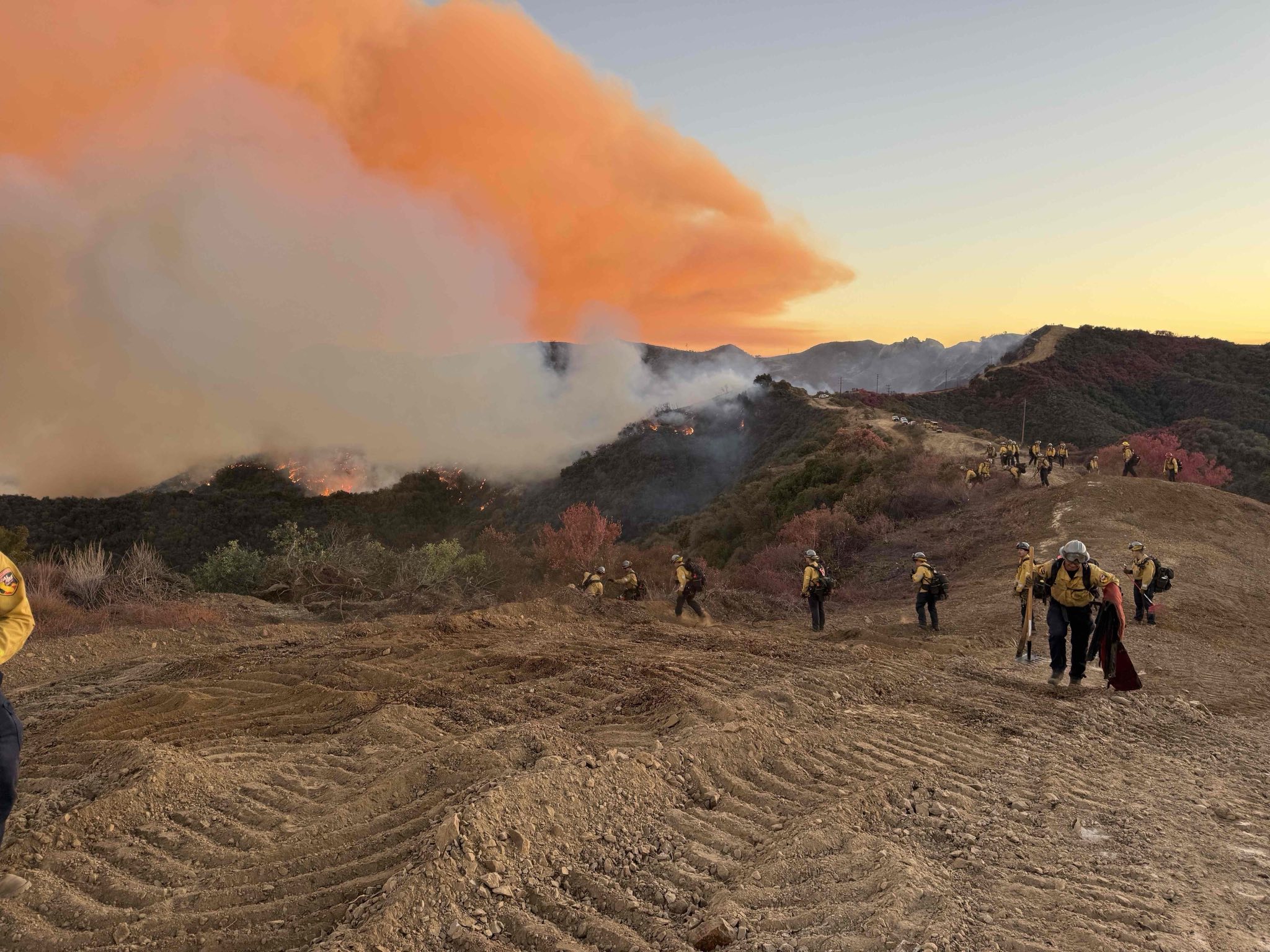
Cal National Guard helping out in the LA Fires during January 2025
California emergency response
Governor Newsom immediately stepped in to help local communities in their continued response, issuing a declaration of emergency on January 7, 2025 and requesting federal assistance. The following day, then-President Biden approved Governor Newsom’s request for a Presidential Major Disaster Declaration.
The state also provided aid directly. In the first few weeks after the firestorms, Governor Newsom signed special session legislation to provide over $2.5 billion to bolster ongoing response efforts and jumpstart recovery and rebuilding, including through:
-
Emergency protective measures, evacuations, sheltering for survivors, debris removal and cleanup, post-fire hazard assessments (such as flash flooding and debris flows), traffic control, and other necessary emergency response activities.
-
$4 million to expedite recovery by supporting local agencies to accelerate permitting.
-
$1 million to rebuild fire-damaged school facilities and provide technical assistance to impacted local school districts.
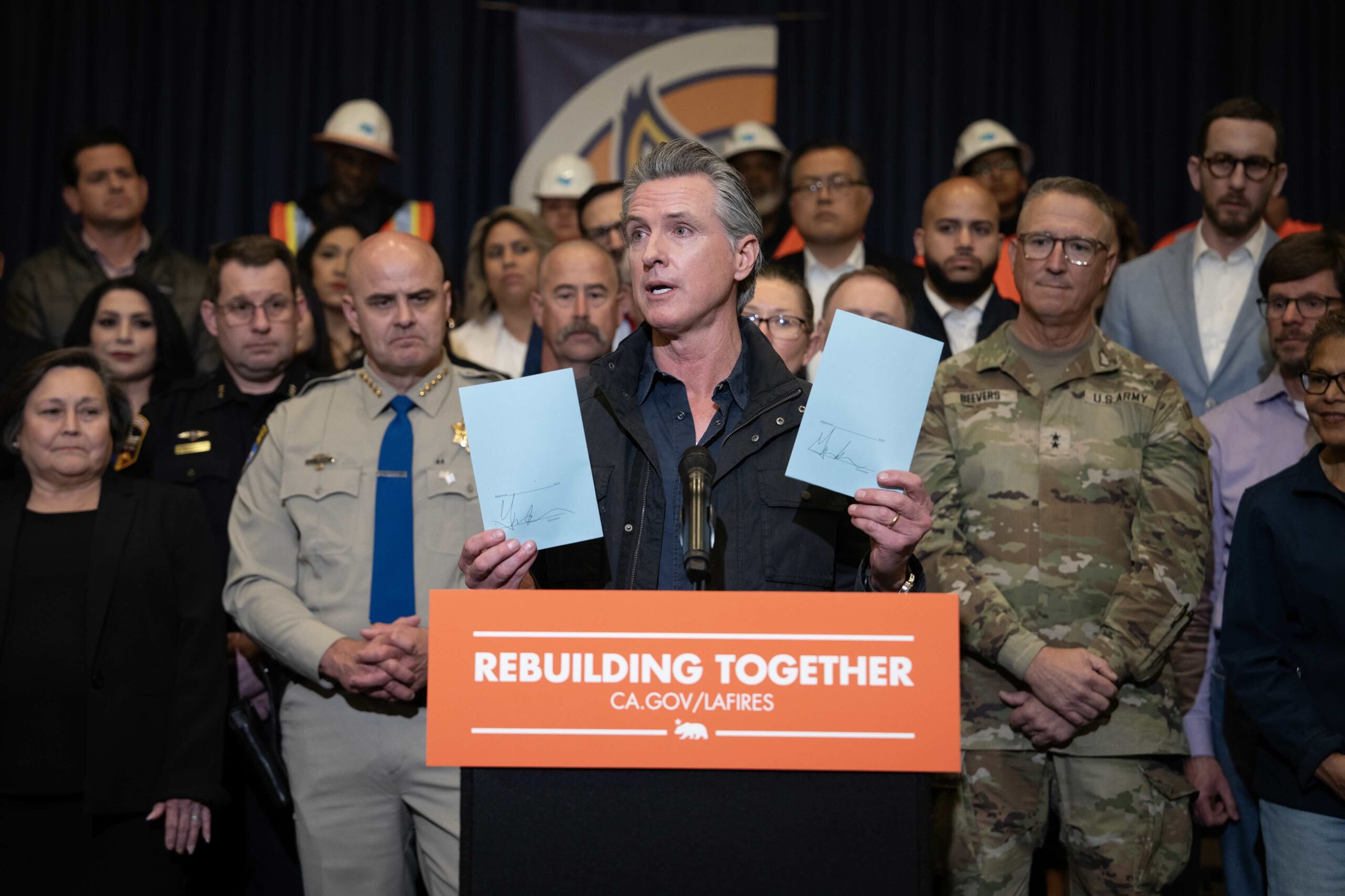
Governor Newsom signing special session legislation of over $2.5 billion for response and recovery efforts in mid-January 2025
Governor’s executive orders to speed recovery
The Governor also issued his first executive order on January 7 to help streamline state laws and make resources more quickly available. Over the next 12 months, this order would be followed by 26 additional executive orders based on feedback from survivors, local communities, and first responders to help target resources, accelerate recovery, and remove red tape.
While the state does not issue residential building permits, the Governor’s actions are directly enabling historic local results that far outpace any previous major wildfire recovery in California. The Governor continues pressing local governments and insurers to move faster. Local governments are now issuing rebuilding permits nearly three times faster than comparable single-family and ADU permits issued in the five years before the fires. Reviews are averaging under 30 days — the benchmark the Governor set at the outset.
As of this week, out of 6,191 applications received, 2,617 rebuilding permits have been issued by agencies across the city and county, with 3,487 currently in review. For comparison, one year after the Camp Fire — which destroyed a similar number of homes — just 385 permits had been issued. Following the 2023 Maui fire, construction on the first home did not begin until almost a year after the fire. The state has also funded pre-approved, low-cost home designs tailored to the architectural character of affected communities — allowing permits to be issued in a fraction of the time.
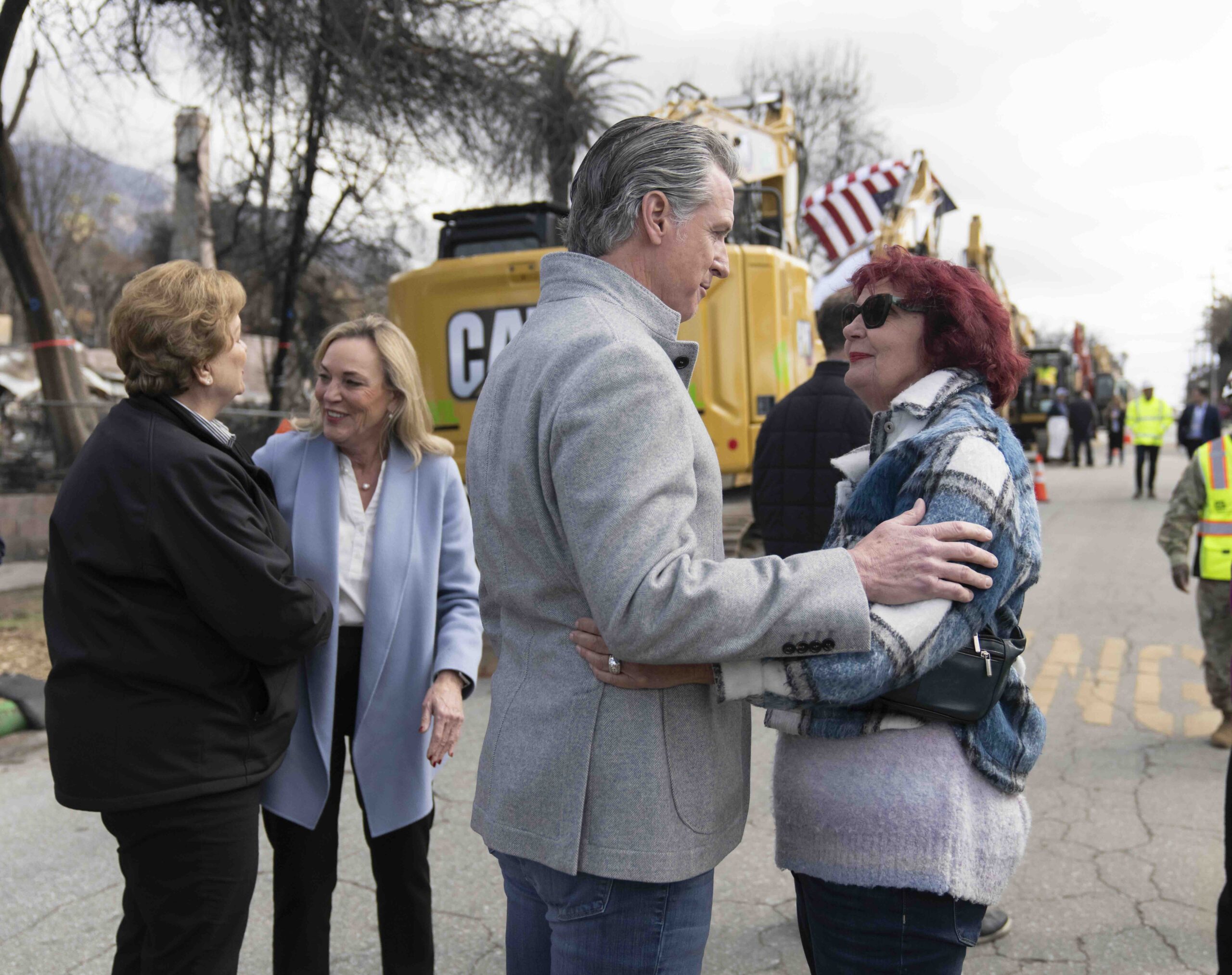
Governor Newsom meeting with LA fire survivor, Margot Stueber, who was the first to have her property totally cleared by the Army Corps of Engineers
Accelerating recovery and protecting communities
Many survivors lost community spaces, historic neighborhood pillars, and schools that made communities feel like home. From the start, Governor Newsom and his administration have worked hand-in-hand with survivors to help communities recover and rebuild stronger. The Governor has helped accelerate the rebuilding of communities by:
-
Fast-tracking permitting and rebuilding. Governor Newsom issued an executive order to streamline the rebuilding of homes and businesses — suspending permitting and review requirements under the California Environmental Quality Act (CEQA) and the California Coastal Act. The Governor also issued an executive order further cutting red tape by reiterating that permitting requirements under the California Coastal Act are suspended for rebuilding efforts and directing the Coastal Commission not to issue guidance or take any action that interferes with or conflicts with the Governor’s executive orders. Additionally, the Governor issued an executive order removing bureaucratic barriers, extending deadlines, and providing critical regulatory relief to help fire survivors rebuild, access essential services, and recover more quickly.
-
Providing tax and mortgage relief to those impacted by the fires. California postponed the individual tax filing deadline to October 15 for Los Angeles County taxpayers. Governor Newsom suspended penalties and interest on late property tax payments for a year, effectively extending the state property tax deadline. The Governor also worked with state– and federally-chartered banks that have committed to providing mortgage relief for survivors in certain zip codes, and later extended and expanded on that relief through legislation. He also announced a $125 million mortgage relief package for homeowners impacted by the Los Angeles fires and other recent disasters, which was recently adjusted to reach even more fire survivors.
-
Suspending building codes. In addition to issuing multiple executive orders, Governor Newsom has also helped speed permitting and rebuilding by suspending implementation of new building codes for residents rebuilding from the fires to create certainty and avoid the need to modify applications and lengthen the permitting process. This includes allowing homeowners who built their homes to the standards in the 2019 Building Code to use their previously approved plans, and a suspension of building codes that would have gone into effect on January 1, 2026, when not all homeowners will have finalized their plans to rebuild.
-
Safeguarding survivors from speculators and price gouging. Governor Newsom expanded restrictions to protect survivors from illegal price hikes on rent, hotel and motel costs, and building materials or construction. The Governor also issued an executive order to protect firestorm victims from predatory land speculators making aggressive and unsolicited cash offers to purchase their property.
-
Getting kids back in the classroom. Governor Newsom signed an executive order to quickly assist displaced students in the Los Angeles area and bolster schools affected by the firestorms.
Investing in communities
The Governor launched LA Rises, a unified recovery initiative that brings together private foundation leaders, grassroot organizers, and government agencies that are working in partnership to support the recovery of Los Angeles. The organization has helped connect local communities with funding and trusted resources. More recently, LA Rises, in collaboration with community input, launched a new online resource to further help LA fire survivors navigate rebuilding.

At Foothill Catalog, Governor Newsom met with cofounder and Executive Director Alex Athenson; and cofounder, project architect and Director of Communications Cynthia Sigler. This local nonprofit offers low-cost, custom-designed plans to fire survivors, saving time and money on architectural and permitting fees. Foothill Catalog has received $1 million from the LA Rises initiative in partnership with the California Fire Foundation, to streamline the rebuilding process.
Supporting local businesses
As a result of the Governor’s streamlining efforts, funding assistance to locals, and work to speed recovery — along with dedication and outside-the-box thinking by local agencies — thousands of permits have already been issued in Los Angeles at a rate that is, on average across the region, nearly three times the speed prior to the fires. In hands of local government for 30 days, on average, permits are approved by local agencies across the region in less than 90 days.
-
Helping businesses and workers get back on their feet. The Governor issued an executive order to support small businesses and workers, by providing relief to help businesses recover quickly by deferring annual licensing fees and waiving other requirements that may impose barriers to recovery. Additionally, the state extended the January 31, 2025, sales and use tax filing deadline for Los Angeles County taxpayers until April 30 — providing critical tax relief for businesses.
-
Through LA Rises, the state, together with Maersk and APM terminals, provided $10m to provide cash assistance small businesses, non-profits, and workers through LA County’s LA Region Small Business and Worker Relief Funds
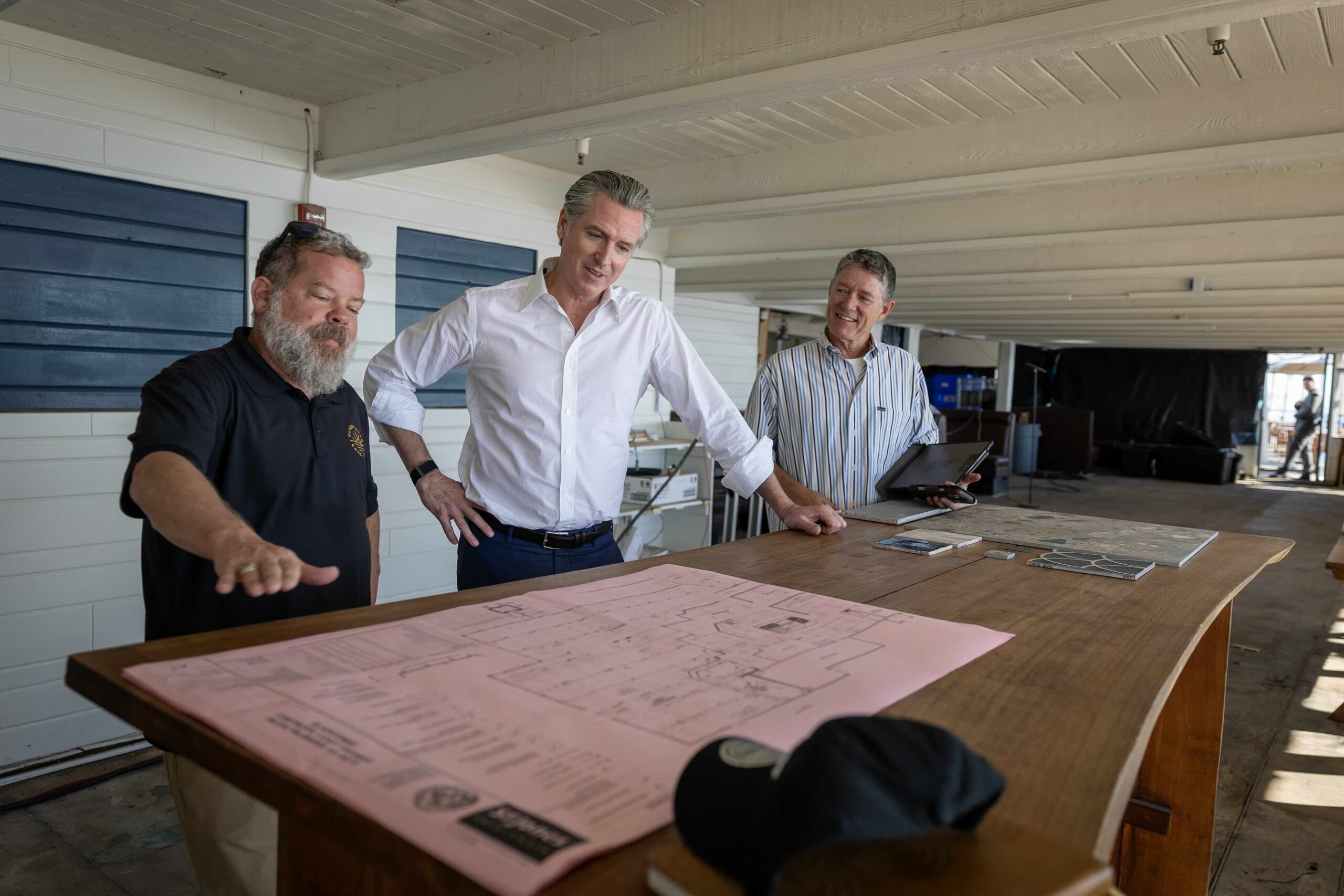
While visiting areas affected by the LA fires, Governor Newsom made a stop at Gladstones, a landmark restaurant which was damaged by the fire in the Palisades. The restaurant was closed in the months following the fires due to smoke damage. Its recent reopening demonstrates the community’s resilience and continued progress towards recovery.
Cleaning up communities
With an eye toward recovery, the Governor took immediate emergency response action and set the table for fast, safe rebuilding. He signed an executive order to allow expert federal hazmat crews to start cleaning up properties as a key step in getting people back to their properties safely. The Governor also issued an executive order to help mitigate the heightened post-fire risk of mudslides and flooding and protect communities by hastening efforts to remove debris, bolster flood defenses, and stabilize hillsides in affected areas.
-
Historic debris removal operation. The LA Fires cleanup is the second largest in state history after the Camp Fire and was jointly managed by the Governor’s Office of Emergency Services (Cal OES) and United States Army Corps of Engineers, in partnership with Federal Emergency Management Agency (FEMA), as well Los Angeles County and City of Los Angeles. At the six-month mark, Governor Newsom announced the substantial completion of the public debris removal program from more than 10,000 fire damaged parcels — marking the fastest major disaster cleanup in American history.
-
Billions of pounds of debris remediated. The volume of ash, soot and structural debris cleaned up during this short time is nothing short of breathtaking. Crews removed more than 2.5 million tons — or 5.5 billion pounds — of ash, debris, metal, concrete, and contaminated soil in nine months’ time as part of California’s Consolidated Debris Removal Program. The total tonnage removed from the Eaton and Palisades Fires is equivalent to 92 Statues of Liberty. It is twice the amount removed from Ground Zero after 9/11.
New laws to aid in recovery
Governor Newsom signed a bipartisan package of bills to aid in the rebuilding and recovery efforts of Los Angeles. This legislation represents one of the most significant reforms to the state’s disaster response, incorporating lessons learned and strengthening California’s ability to respond to future disasters.
Among other things, the new laws:
-
Protect homeowners and tenants immediately following a disaster.
-
Provide property tax relief for wildfire survivors.
-
Help workers recover.
-
Make it easier to rebuild.
-
Make insurance work better for property owners and small businesses.
-
Crack down on looting and first responder impersonators in evacuation zones.
-
Reduce the risk of catastrophic wildfire.
Additionally, Governor Newsom has signed into law legislation for Los Angeles fire survivors to receive stronger mortgage relief (AB 238) and to provide fair interest for disaster-affected homeowners (AB 493). California will continue aiding those affected by natural disasters now and in the future, this administration will not leave any Californian behind. However, this work cannot be continued without the support of the federal government.
Trump abandons LA fire survivors
In addition to taking action to speed rebuilding, the Governor is also standing up for the Altadena, Palisades, and Malibu communities by calling out the White House for failing to approve long-term disaster funding for survivors of last year’s catastrophic Los Angeles wildfires.
The Governor, who recently went to Washington, D.C in early December to advocate for survivors, renewed his call for immediate approval of the disaster supplemental, urging Congress and the President to deliver the same compassion and urgency that have been extended to other communities across the nation. This is the fourth request for funding since February, when President Trump promised he would “take care” of survivors.
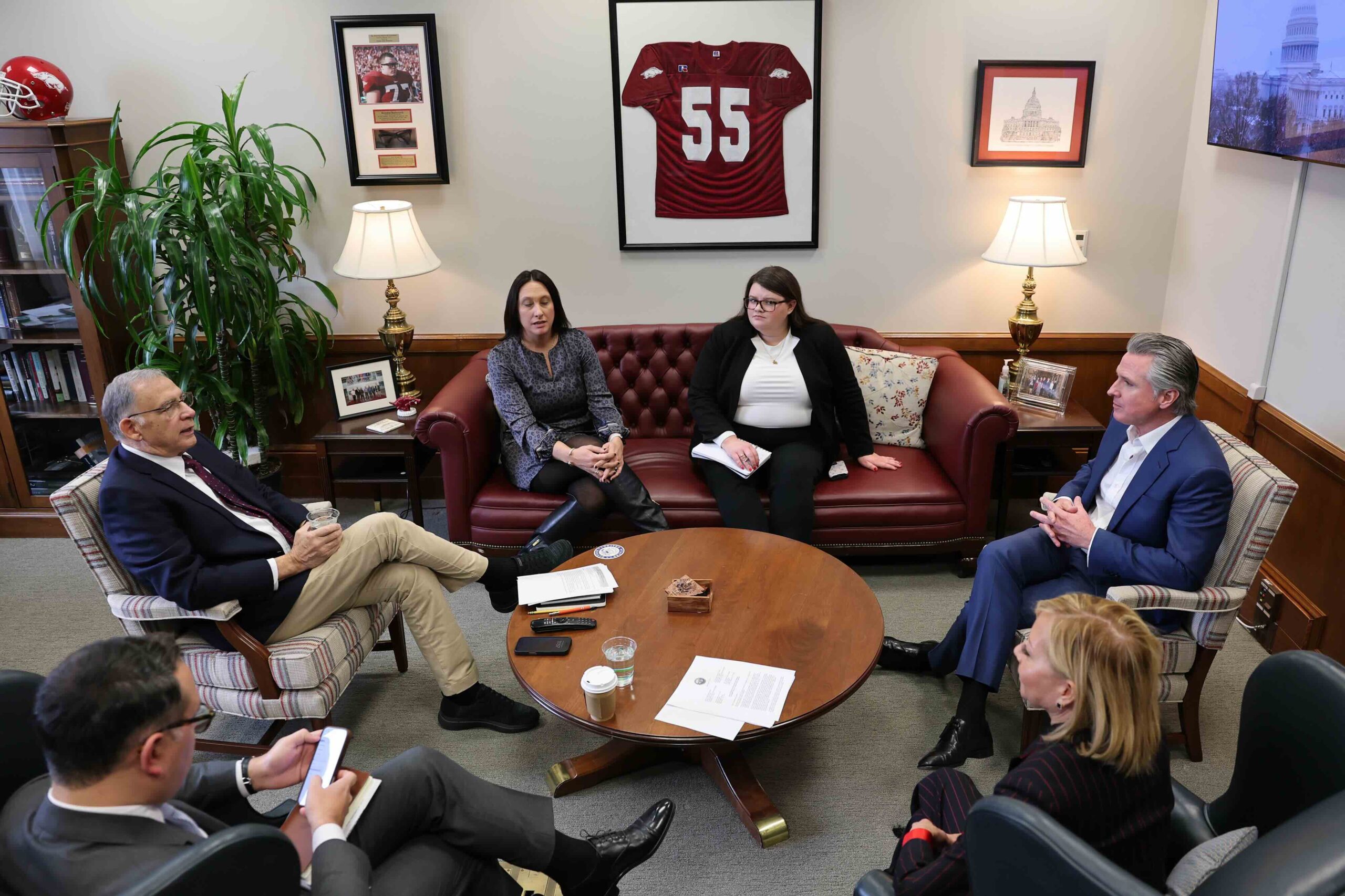
Governor Gavin Newsom meets with Senate Agriculture Chair John Boozman (R-Arkansas) and staff members to advocate for federal wildfire aid for LA fire survivors.
- Fund the rebuilding of schools, childcare centers, homes, and vital community facilities. This helps thousands of working families, veterans who lost homes, and nearly thousands of students displaced from their schools.
- Keep small businesses open, support the economy, and maintain jobs. LA’s small businesses and family-owned enterprises are the backbone of our local and national economy. Disaster loans and grants will keep them open, preserve thousands of jobs, and spur wider economic recovery — benefiting Americans who may never set foot in Los Angeles but rely on its goods, services, and culture.
- Restore damaged water systems, rebuild responder infrastructure, and improve air quality monitoring. This protects not only LA’s population but the tens of millions who travel, conduct business, and interact with the region each year.